Broome Tides And Tours: What Runs At Low Tide And High Tide
Broome sits on a coast where the tide can swing by around 10 metres, and several of the town's best-known sights only appear when the water pulls back far enough.
Short answer
Broome's tides swing up to around 10 metres, the biggest range in the southern hemisphere. Gantheaume Point dinosaur footprints need tides below 2.16 m, most track sites under 2.4 m, and the Roebuck Bay flying boat wrecks appear below 0.86 m.
Broome's water goes a very long way out, and it comes a very long way back in. According to Visit Broome, "The Kimberley Coast has the biggest tides in the southern hemisphere. The difference between high and low tides is up to around 10 metres." That single sentence shapes more of a Broome holiday than any other natural fact about the town: it decides which morning you can walk to 120-million-year-old footprints, which afternoon the flying boat wrecks surface from Roebuck Bay, and which nights the moon climbs a staircase of light off the tidal flats.
This guide sets out the numbers that matter, where the official tide information lives, and how tides sit alongside the tours you are probably already considering. Broome tours run to their own schedules, not to the tide. None of the eleven publishes a tide time, and none is sold as a low-tide departure or rescheduled by the water.
Why Are Broome's Tides So Large?
Broome's tide range reaches up to around 10 metres between high and low water, the biggest in the southern hemisphere, because the Kimberley Coast funnels and amplifies the tidal surge across a wide, shallow shelf. That scale is why a beach can vanish at high water and reappear as a kilometer of rippled sand hours later.
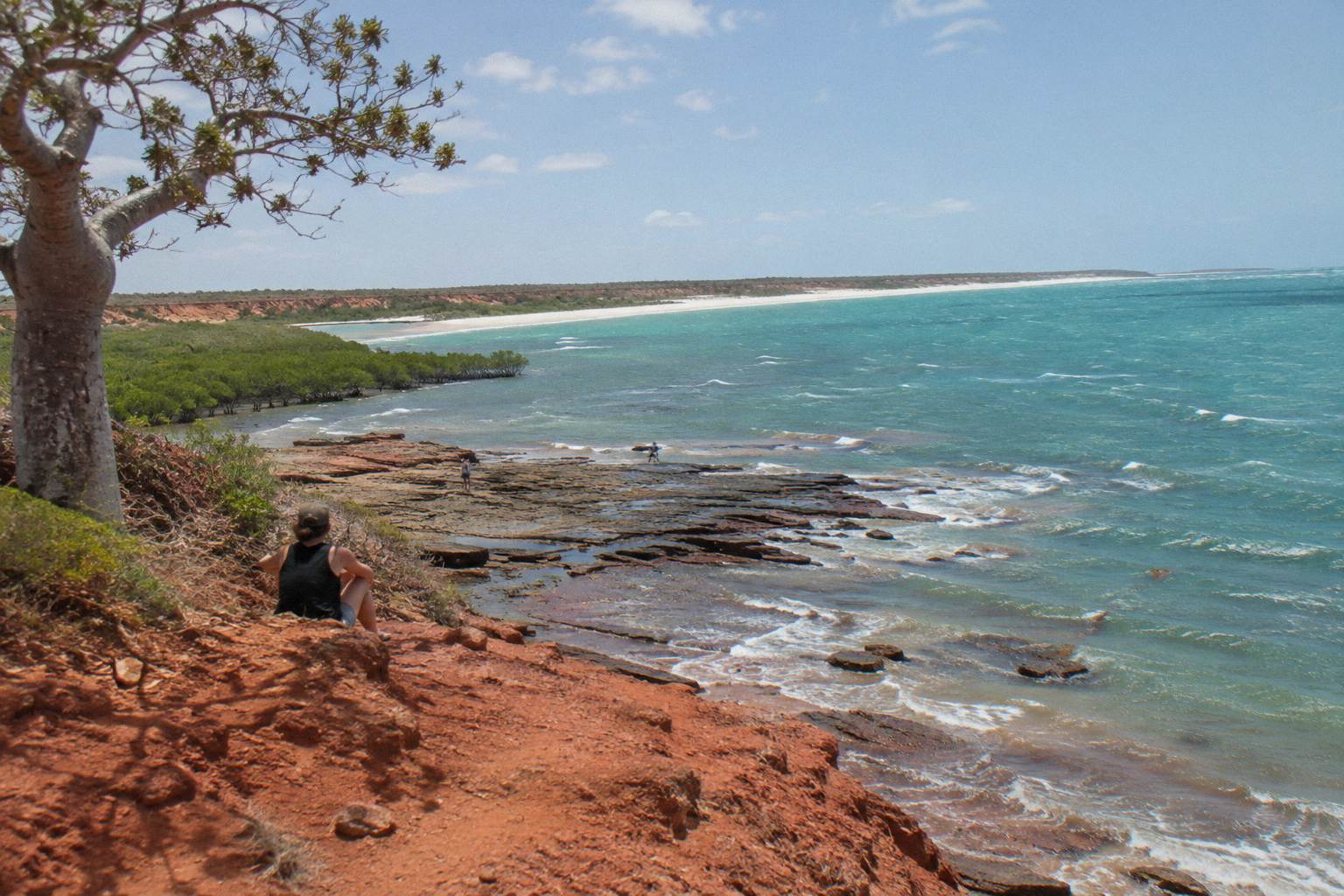
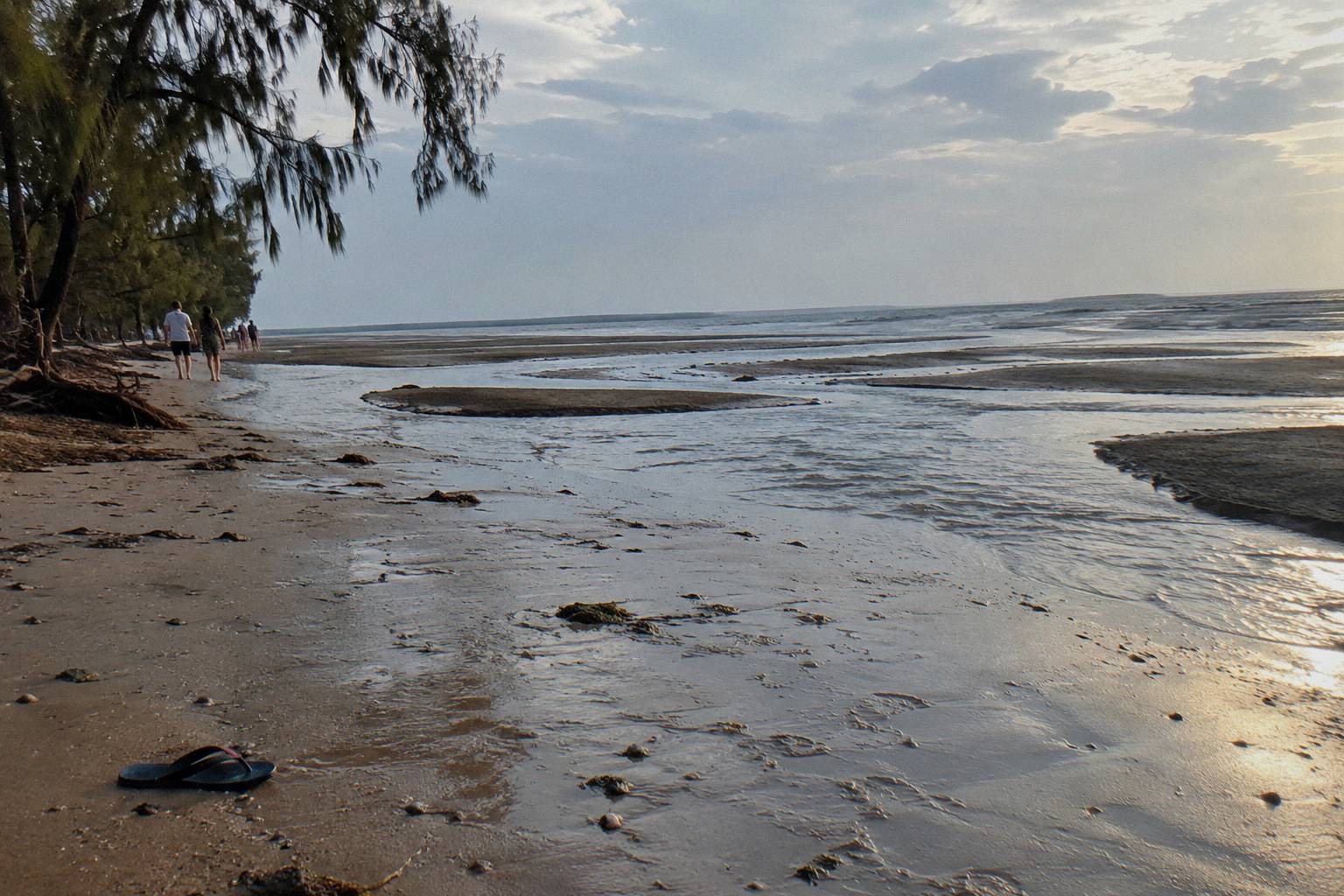
The practical effect for a visitor is that "the beach" and "the water" are two different places at different hours of the day. At a big low, Roebuck Bay becomes an expanse of grey-red mudflat that looks almost lunar; at a big high, the same flats are under the sea and small boats float over them. The same is true along the coast towards Gantheaume Point, where the rock shelves that hold the dinosaur tracks spend much of their time underwater and only emerge when the water drops far enough.
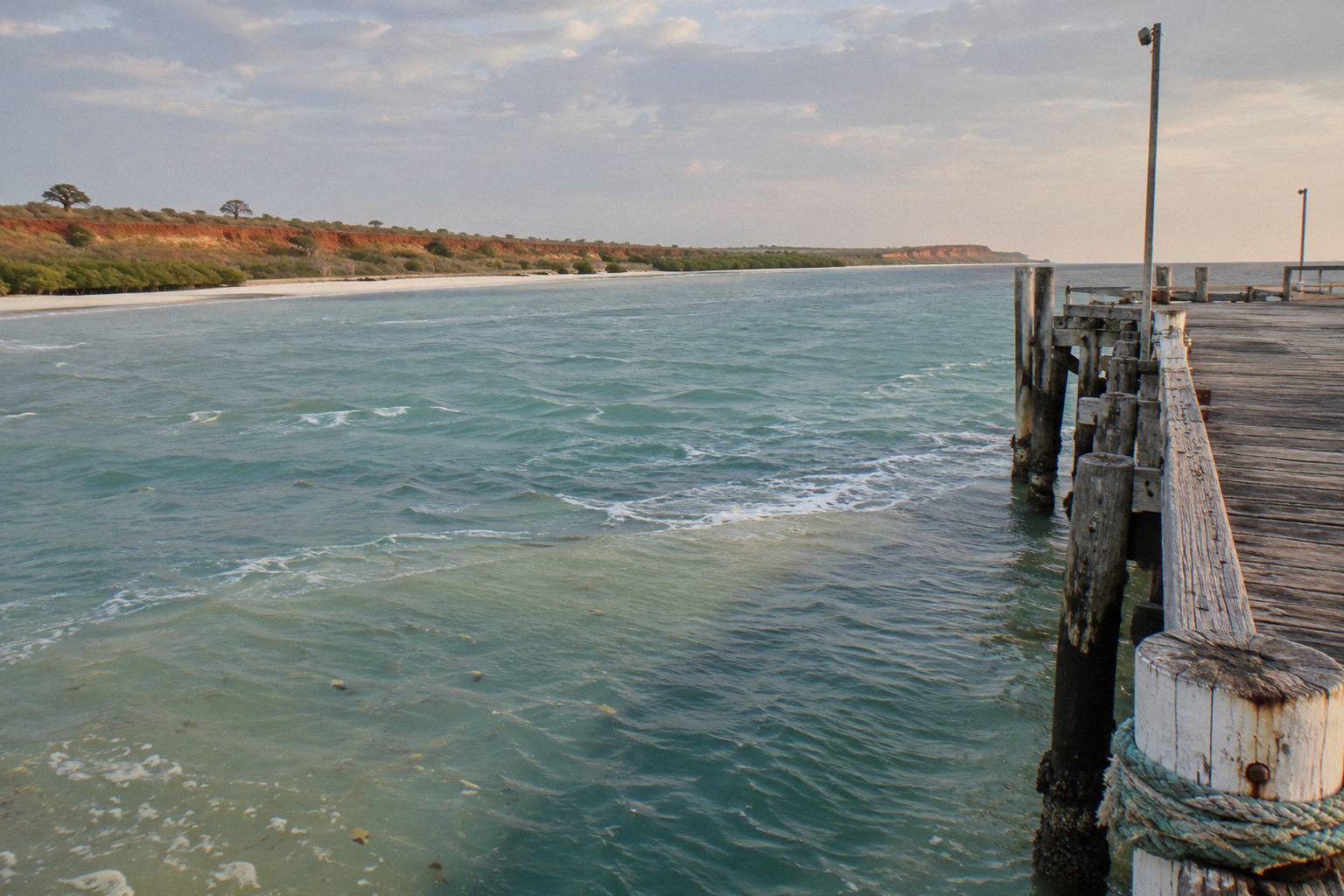
It also means the tide turns quickly. Visit Broome notes that tides change quickly around Cable Beach, where the vehicle speed limit is 15 km/h, and the warning applies just as much to anyone on foot a long way from shore. People walk out to look at exposed reef and sandbars, then find the return trip knee-deep or worse. Check the tide height, not just sunrise or sunset times, before you plan any walk that leaves dry sand behind.
The figures most quoted around town are 2.16 metres and 0.86 metres, and both come from official pages. They are not generalities: they are the specific low-tide thresholds at which two of Broome's signature sights become reachable, and they are worth writing down before you arrive.
Which Tide Heights Unlock Footprints, Wrecks And Flats?
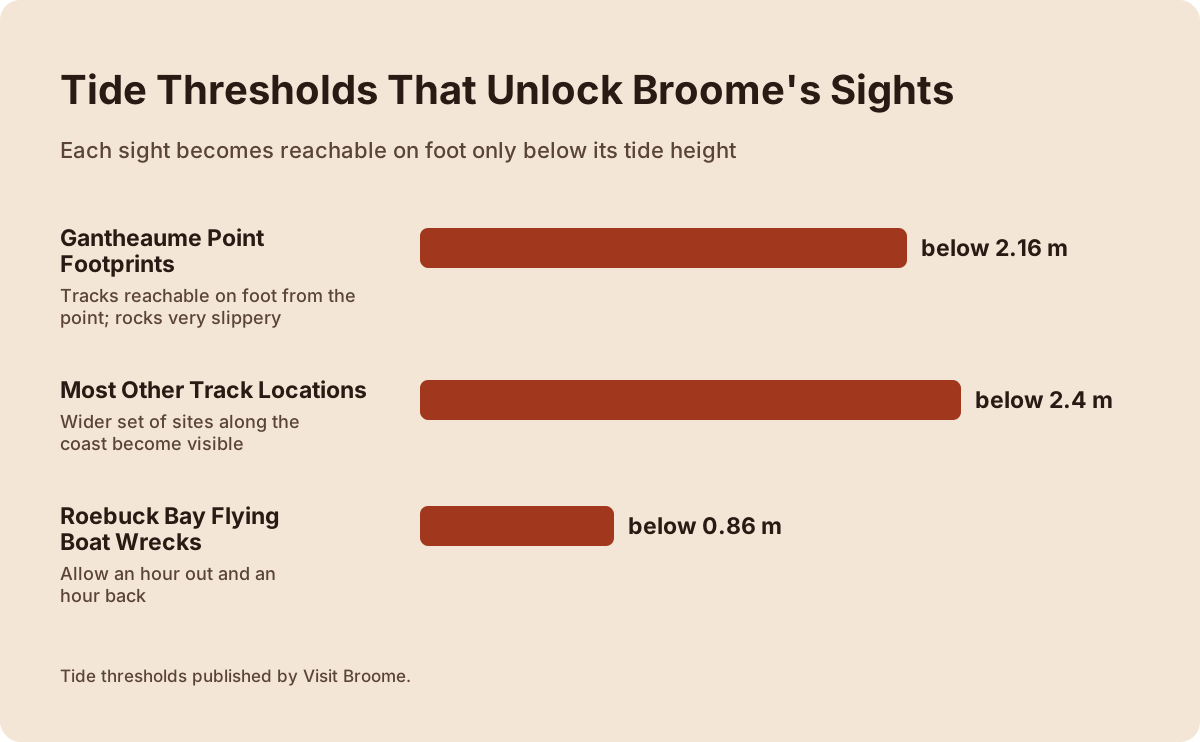
Footprints at Gantheaume Point need a tide below 2.16 m, most other track locations need under 2.4 m, and the flying boat wrecks in Roebuck Bay appear below 0.86 m. Each threshold is a real number published by Visit Broome, and each one turns a short walk into a timed mission.
These three numbers are the whole game for tide planning in Broome. A tide of 1.9 m puts the famous theropod tracks within reach on foot. A tide of 0.8 m, a much rarer event, exposes wrecks that sit further out in the bay and are protected under the Heritage of WA Act 1990. Between those poles, the intertidal zone is either a walkable shelf or a shallow sea, and the difference can arrive within a couple of hours.
| Sight | Tide threshold | What it means in practice |
|---|---|---|
| Gantheaume Point theropod footprints | Below 2.16 m | Tracks reachable on foot from the point; rocks very slippery |
| Most other dinosaur track locations | Below 2.4 m | Wider set of sites along the coast become visible |
| Roebuck Bay flying boat wrecks | Below 0.86 m | Wrecks emerge from the water; allow an hour out and an hour back |
| Staircase to the Moon tidal flats | Exposed flats at moonrise | Full moon rises over Roebuck Bay mudflats, 2-3 nights a month, March to October |
| Cable Beach vehicle access | Tides 9 m or greater trigger closures | Beach closed to vehicles 2 hours either side of big tides; ramp status conflicts across sources |
Visit Broome publishes a "special dates" PDF that marks the low-tide days on which the footprints and the wrecks are visible, alongside the Staircase to the Moon dates. That single document is the cleanest planning tool a visitor has, because it converts tide tables into a calendar of actual good days rather than leaving you to do the arithmetic yourself.
The thresholds also explain why two visitors can have opposite impressions of the same attraction. Someone who turns up at a 2.5 m tide sees wet rock and no tracks. Someone who arrives a few days later at 1.8 m sees the footprints plainly. Neither is wrong about the sight; they simply saw it at different points in a ten-metre cycle.
How Do You See The Dinosaur Footprints At Low Tide?
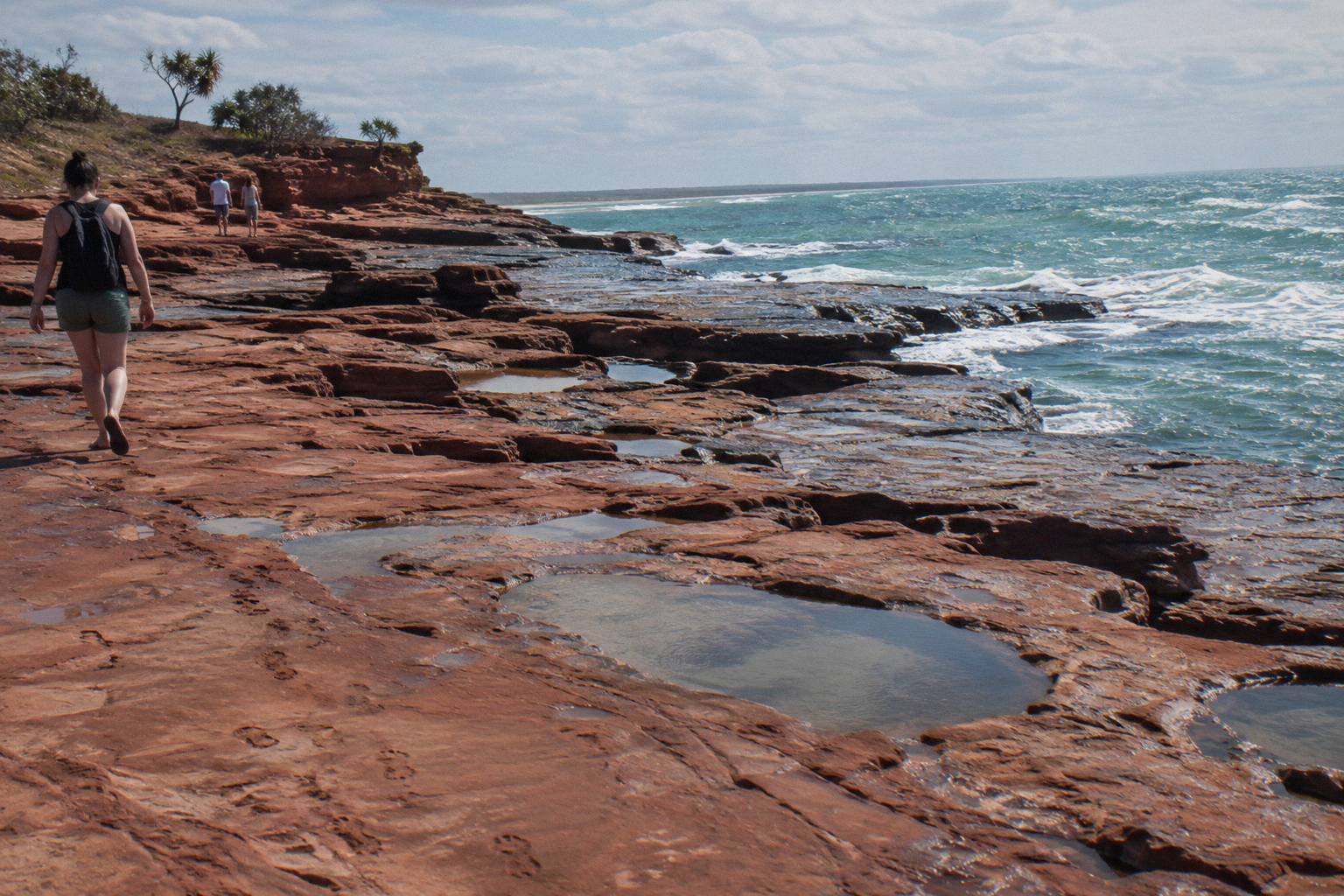
The theropod tracks at Gantheaume Point are reachable on foot when the tide is below 2.16 m, most track locations need a tide under 2.4 m, the rocks are very slippery, and visitors are asked to stay on designated paths at the request of Traditional Owners. There are no lifeguards at the point.
The tracks themselves are extraordinary: early Cretaceous, about 120 million years old, spread along roughly 80 km of coast, and included in the West Kimberley National Heritage List in August 2011, according to Visit Broome's footprint page. The accessible ones at Gantheaume Point are real impressions left in what was once soft sediment, now a rock shelf that spends most of each tide cycle under water.
Getting there at the right moment takes preparation. You need the day's tide prediction, you need to be at the point before the low, and you need shoes that grip, because the rocks are very slippery even when exposed. The designated-path request is not bureaucratic caution: the surrounding area holds cultural values, and staying on the marked route respects the Traditional Owners' wishes. Our separate guide to Gantheaume Point footprint tours and timing goes deeper on the practicalities.
One note on tour framing. The Dinosaur Adventure Cruise run by Broome Adventure Cruises is named for dinosaurs and earns the name: the listing states that guests stand in 120-million-year-old dinosaur footprints on a secluded beach. It runs 6 hours with transfers included and carries a rating of 4.9 from 198 reviews, from US$172 per person. If seeing the actual tracks matters to you, this cruise includes them.
Where Are The Flying Boat Wrecks And When Can You Reach Them?
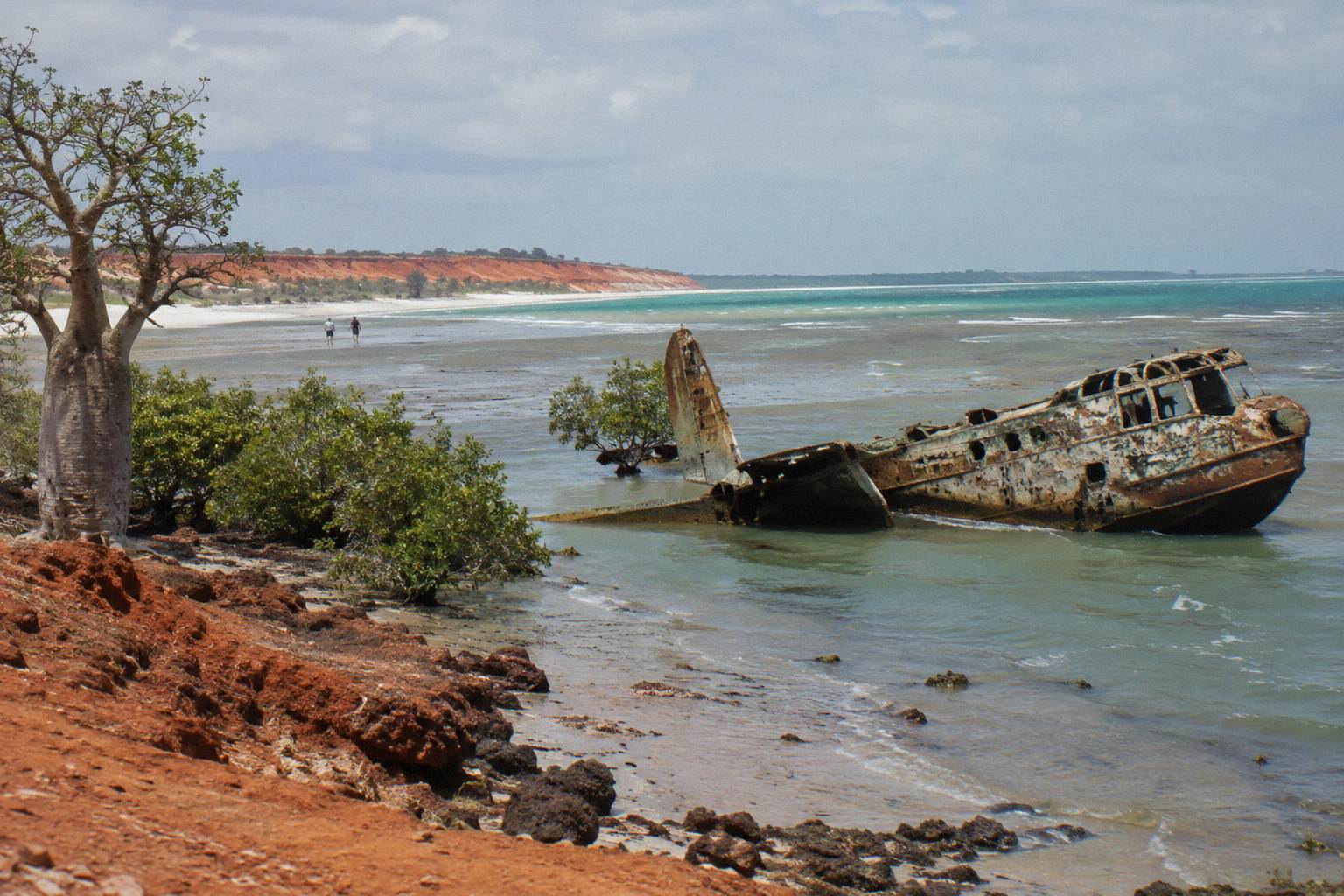
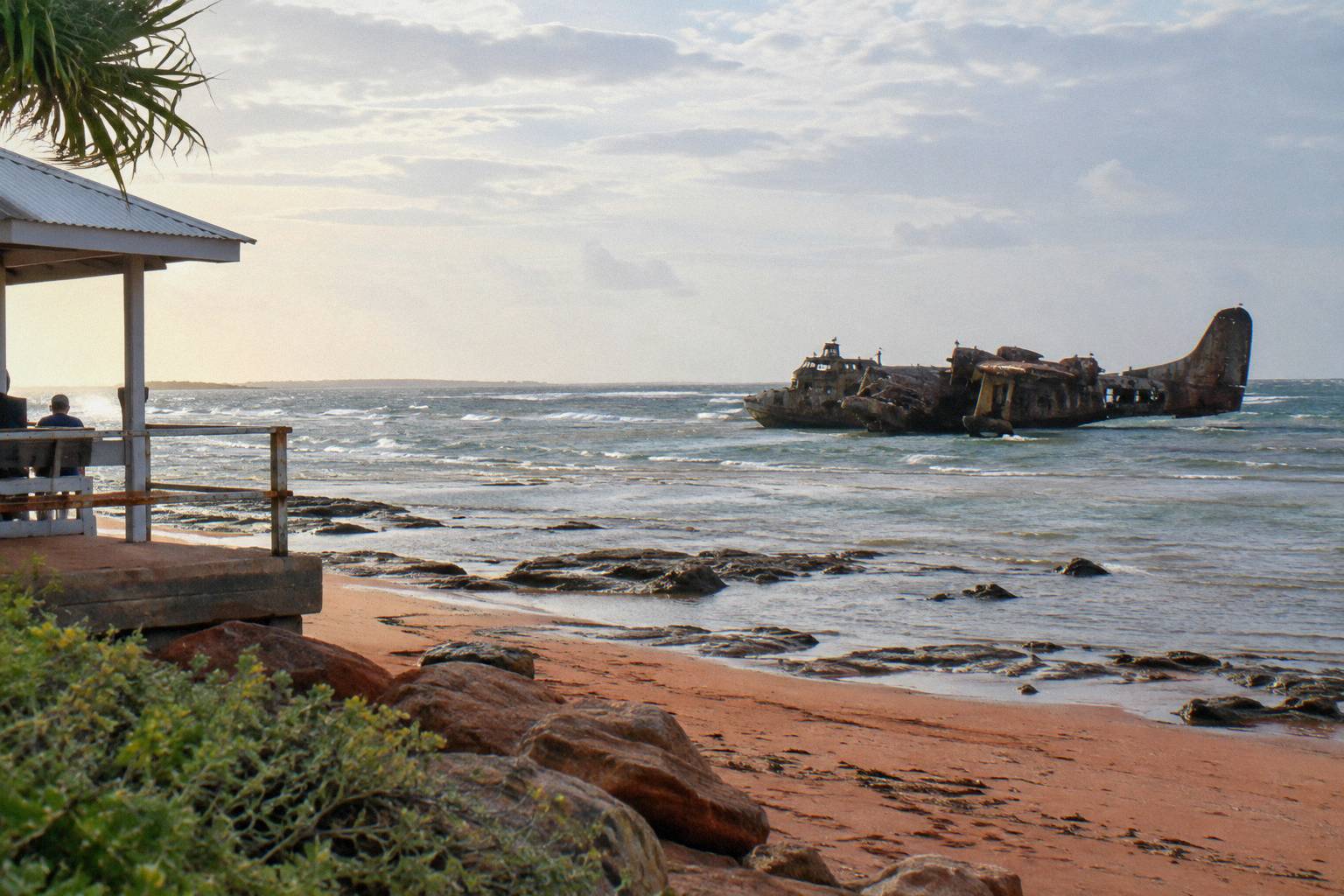
The flying boat wrecks lie in Roebuck Bay and become visible when the tide drops below 0.86 m, a much rarer low than the footprint threshold. Visitors should allow an hour to walk out and an hour to walk back, and the wrecks are protected under the Heritage of WA Act 1990.
These wrecks sit far enough out in the bay that only the biggest low tides of the month lift them clear of the water. A 0.86 m tide does not happen every day, or even every week, which is exactly why Visit Broome marks the qualifying dates in its special dates PDF alongside the footprint days.
The walk is a commitment. An hour out and an hour back across tidal flats means you need to time your arrival around the low itself, not just start whenever you feel like it, because the water returns across the flats faster than most people expect. Soft mud, shallow channels and the sheer distance are the practical obstacles. Treat the return leg with as much respect as the outbound one.
The legal status matters too. Protected under the Heritage of WA Act 1990, the wrecks are heritage structures, not beachcombing material. Look, photograph, and leave everything exactly where the tide found it.
For most visitors, the honest planning summary is this: the footprints at 2.16 m are a realistic target on several days of any fortnight, while the wrecks at 0.86 m are a genuine piece of luck. If your dates do not line up, the wrecks will still be there, and there is plenty else to fill a Broome day, as our overview of things to do in Broome worth booking sets out.
How Do Tides Create The Staircase To The Moon?
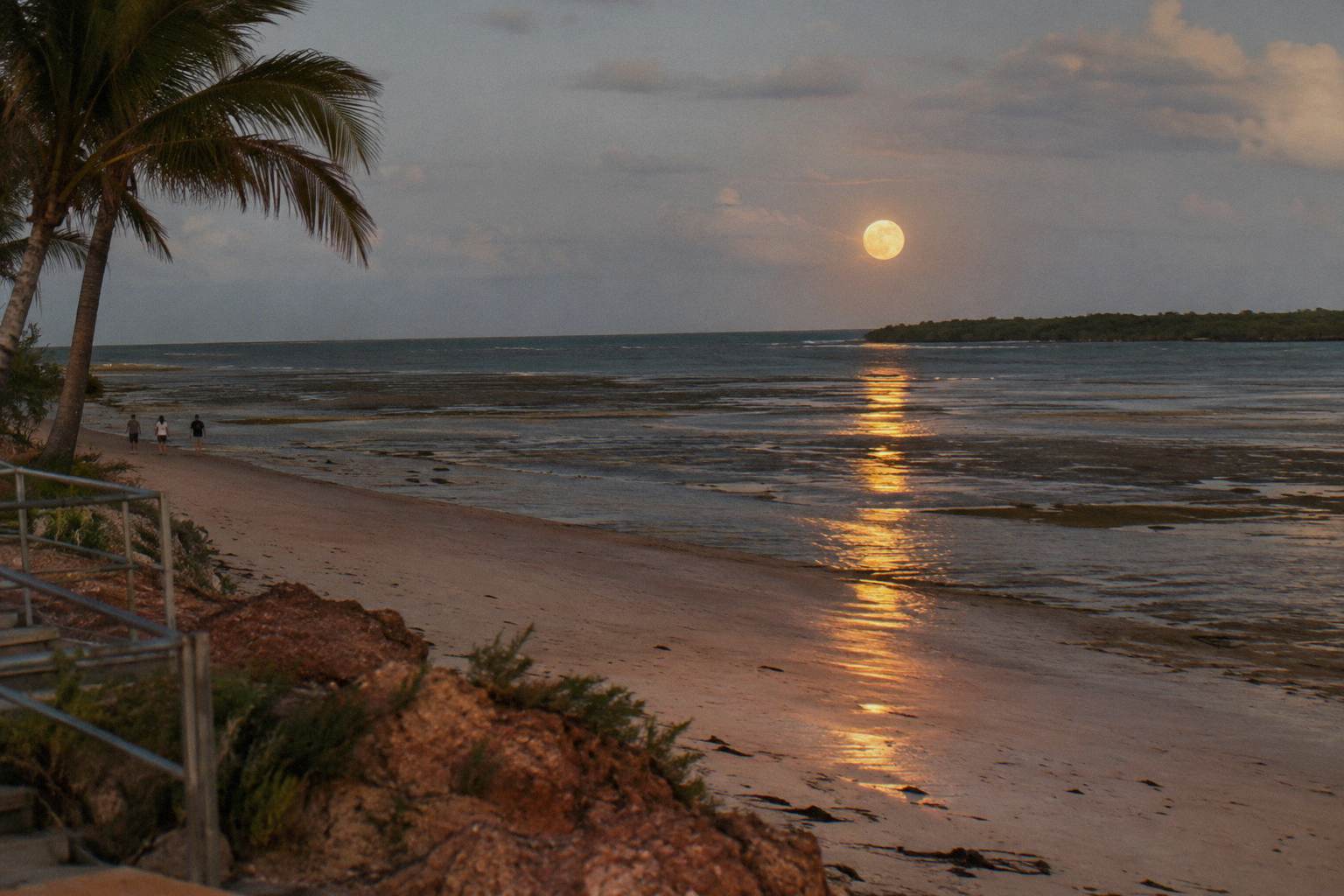
The Staircase to the Moon happens when a full moon rises over the exposed tidal flats of Roebuck Bay, on 2 to 3 days a month between March and October. The moonlight reflecting off the wet ripples of the flats builds the illusion of a ladder climbing to the sky.
This is the tide's most theatrical trick. The flats need to be exposed at the moment of moonrise, the moon needs to be full, and the viewing needs to happen from the eastern shore of the peninsula at spots like the Town Beach (Guwarri) precinct, The Mangrove Hotel, the Broome Fishing Club, the Broome Golf Club, the Roebuck Bay lookout, or across the road from Matso's. Cygnet Bay also offers viewing, according to Visit Broome.
Only the 2027 dates are published as text, supplied by Kimberley Astronomy Tours: three nights in each of eight months, 24 nights in total, beginning 23, 24 and 25 March and running through to 16, 17 and 18 October. Visibility "may vary depending on the local weather, tides, sunset and moonrise", as the official page puts it, so a listed date is a chance, not a guarantee.
Around the phenomenon sits a small festival economy. Markets run at Town Beach on Hamersley Street from 4pm to 8pm on selected dates, with Thursday night markets usually from June to September. There is also the Fusion Moonrise, when the full moon aligns with the Fusion sculpture at the Carnarvon Street roundabout in Chinatown, an event Visit Broome says only happens twice a year, free, with no bookings and traffic restrictions in place. Our dedicated page on Staircase to the Moon viewing and dates carries the full detail.
One boundary worth drawing: none of these Broome tours is a Staircase tour. None is timed for the moonrise or scheduled on Staircase nights. Treat the Staircase as a free, self-directed evening from one of the named vantage points, and book your tours around it rather than hoping one delivers it.
How Do Tides Affect Cable Beach?
Cable Beach runs on the same tidal cycle, with quick changes Visit Broome explicitly warns about, a 15 km/h vehicle speed limit, lifeguards patrolling only the flagged area in front of the surf club in the dry season, and turtle-season vehicle closures from 1 October to 30 November on the north ramp between 8pm and 6am.
The turtle rules are the most specific tide-linked restriction on the beach. The main nester is the flatback turtle, and during the season the north ramp by the amphitheatre closes to vehicles overnight, while the beach itself closes to vehicles for two hours either side of tides of 9 metres or greater, with fines applying. The Shire of Broome's ramp page carries the operational detail.
There is a conflict in the sources about the vehicle ramp that readers should know about rather than be reassured past. Visit Broome says the ramp closed from 3 June 2025 for Stage 2 of the Walmanyjun Cable Beach foreshore redevelopment, with vehicle access moved to Gantheaume Point, while the Shire page says the ramp is fully accessible from 1 March to 30 September when conditions allow. Given the contradiction, the only safe advice is to assume you cannot drive onto the beach and check with the Shire directly before you travel.
Swimming safety also runs with the seasons rather than a fixed calendar. Lifeguards patrol the flagged area in front of Broome Surf Life Saving Club daily in the dry season, and during the wet season Broome's beaches are not patrolled at all. Stinger information exists on Shire pages, describing Irukandji and box jellyfish stings as "rare and preventable", with five stinger stands and two stinger drags a day in the beach season, but no month range is verified, so treat Shire signage on the day as the authority. Our cable beach camel rides guide covers what riding on this beach involves.
Do Any Broome Trips Run At A Particular Tide?
No. None of these tours states a tide time, tide window or tide-dependent schedule on its booking page, and none should be booked on the assumption that it runs at low tide or high tide. Each trip runs to its own stated duration and pickup arrangement, not to the water.
This deserves emphasis because it is the question most readers of a tides page are silently asking. You are checking tide thresholds because you are working out which tours depend on them, and the honest answer is that the dependence runs one way: the sights are tide-governed, while the tours are schedule-governed. The Scenic And Prehistoric Cruise from Broome Adventure Cruises, 5 hours with transfers included, from US$135 per person and rated 4.9 from 215 reviews, names prehistory in its title, but its published facts do not tie it to a tide level. The same discipline applies to every other trip on the roster.
| Trip | Duration | From price | Tide stated? |
|---|---|---|---|
| Broome Town Tour, Panoramic And Discovery Morning | 2.5 hours | from US$81 per person | No |
| Cable Beach Sunset Camel Ride | 1 hour | from US$85 per person | No |
| Snubfin Dolphin Eco Cruise | About 4 hours 15 minutes | from US$127 per person | No |
| Scenic And Prehistoric Cruise | 5 hours | from US$135 per person | No |
| Catamaran Sunset Cruise | About 3.5 hours | from US$107 per person | No |
| Dinosaur Adventure Cruise | 6 hours | from US$172 per person | No |
Prices are booking-page from-prices per person in US dollars. Free cancellation up to 24 hours on the booking page applies to every trip except the Horizontal Falls half day, which is non-refundable and cannot be changed for any reason. That cancellation window is genuinely useful when tides are in play: you can book a scheduled tour, then keep your lowest-tide mornings free for the footprints, and adjust the paid plans if your dates shift.
The sunset options are the clearest example of schedule over tide. The Catamaran Sunset Cruise from Broome Tours WA, about 3.5 hours from US$107 per person, follows the sun rather than the water level, and the Cable Beach Sunset Camel Ride from Broome Camel Safaris, 1 hour from US$85 per person and rated 4.8 from 572 reviews, meets the evening light on the sand. Neither promises a tide condition, and neither needs one. We compare the options in more detail in our Broome sunset cruises guide.
How Should You Plan Tides And Tours Around Each Other?
Work backwards from the special dates PDF: pick your footprint day (under 2.16 m) or wreck day (under 0.86 m) first, block those tide windows as free time, then fit tours into the remaining slots. Every roster trip except the Horizontal Falls half day allows free cancellation up to 24 hours, which buys flexibility if the tide calendar moves your plans.
The practical sequence looks like this. Before you book anything, open Visit Broome's special dates PDF and the Staircase dates for your month. Mark the footprint days, the wreck days if any, and the Staircase nights. Those become your unbooked, self-directed blocks: the low-tide morning walk at Gantheaume Point, the long walk to the wrecks, the free evening at Town Beach or the Mangrove Hotel. What remains is the tour-shaped part of your week, and that is where bookings fit without collision.
| Planning step | What to do | Why |
|---|---|---|
| 1. Get the special dates PDF | Visit Broome marks footprint days, wreck days and Staircase dates | Converts tide tables into a usable calendar |
| 2. Reserve your lowest tides | Keep footprint mornings (under 2.16 m) and wreck days (under 0.86 m) unbooked | These sights cannot be bought as a tide-timed tour |
| 3. Mark Staircase nights | 2027 dates run March to October, 2-3 nights a month | Free viewing |
| 4. Fill remaining slots with tours | Book scheduled trips with 24-hour free cancellation where offered | Lets you reshuffle if weather or tides change plans |
Season shapes the whole calendar. The dry season usually runs May to October and the tropical season November to April, with monsoonal weather most common January to March, and high season from late April to the end of September. Staircase nights only exist between March and October, and the museum and market calendars shift around the same arc. If your trip sits at the shoulder, checking which monthly dates fall inside your stay matters more than any other single piece of planning. Our when to visit Broome for tours guide covers the seasonal trade-offs.
One last planning note for anyone pairing tide walks with booked trips on the same day: the walks are physical. An hour out and an hour back to the wrecks, or a slippery scramble on the Gantheaume Point shelf, is not the ideal warm-up for a 6-hour cruise. Spread them across days where you can, and let the tide calendar, not the booking confirmation, decide which morning is which.
What About The Really Big Water: Horizontal Falls?
The Horizontal Falls half day from Broome, 6 hours with pickup included, from US$1,096 per person and rated 4.8 from 729 reviews, is the roster's one expedition-scale trip, and it is non-refundable and cannot be changed for any reason, so book only when your dates are firm. It sits in Talbot Bay, far beyond Broome's local tide thresholds.
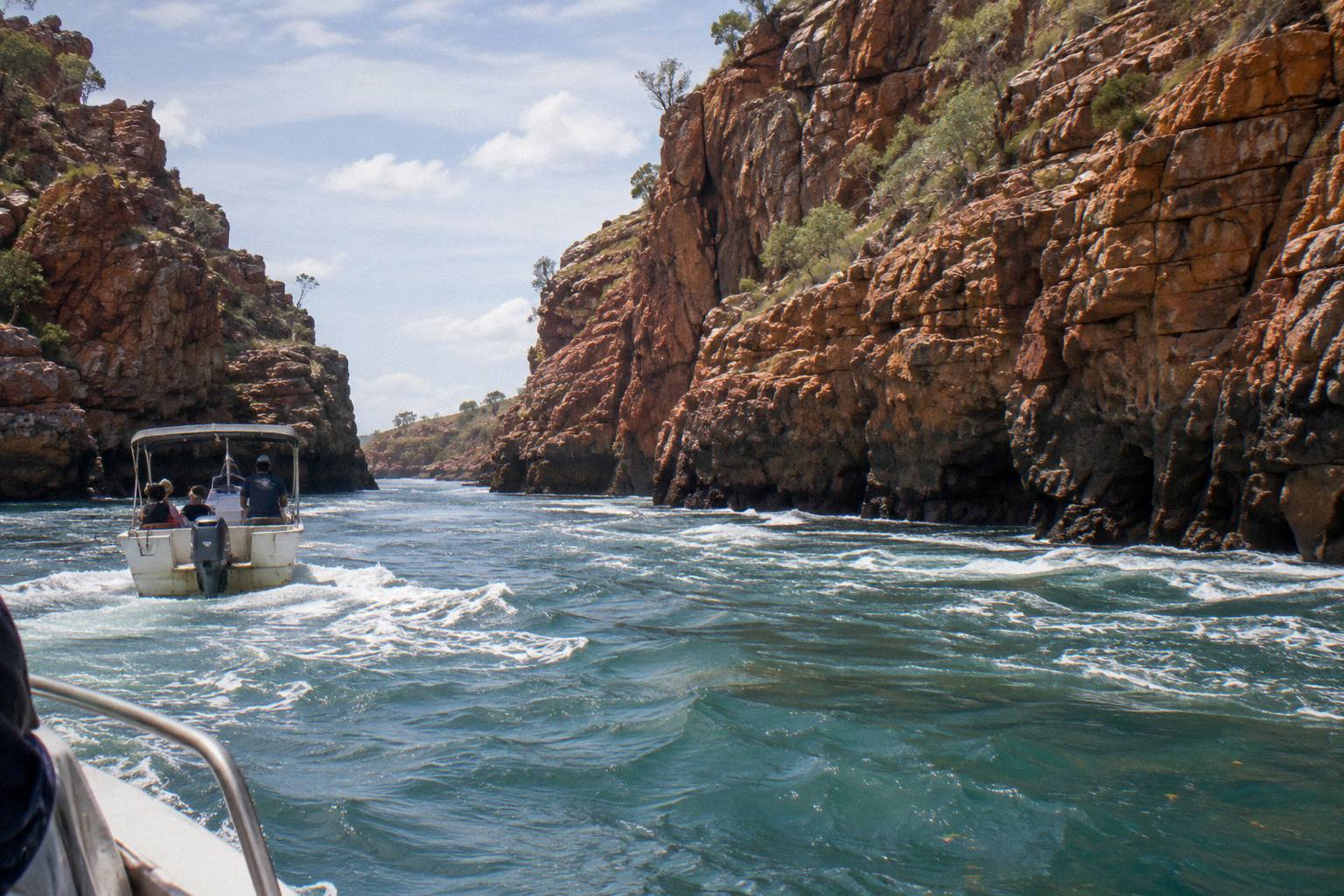
The falls are a product of the same tidal immensity that runs Broome's coast, with seawater forcing through narrow gorges twice a day, but they belong to the Buccaneer Archipelago rather than Roebuck Bay. The trip reaches them by seaplane, which is why the price and duration sit in a different league from every town-based tour. Our dedicated Horizontal Falls guide covers the full picture.
The relevance here is contrast. Broome's own tide thresholds, 2.16 m and 0.86 m, are about what the water reveals locally on foot. The Horizontal Falls experience is about what the same tidal force does when compressed through rock walls hundreds of kilometres away. Same physics, entirely different trip, and the two sit comfortably in one holiday if the budget allows.
This is the one roster trip that is non-refundable and cannot be changed for any reason, so the "book early, adjust later" logic of the rest of this page does not apply here. Read the operator's live listing carefully before you commit, especially in shoulder season when weather can move plans.
Whichever way the tide falls on your dates, the split is the same: the water decides the footprints, the wrecks and the Staircase, while Broome Town Tours keeps the scheduled side of your week running regardless of it.
Common Questions About Broome Tides
Which Tide Heights Unlock Footprints, Wrecks And Flats?
Gantheaume Point theropod footprints are reachable on foot below 2.16 m, most other track locations need under 2.4 m, and the Roebuck Bay flying boat wrecks appear below 0.86 m. Visit Broome publishes a special dates PDF marking the qualifying days.
How Big Are Broome's Tides?
Visit Broome states the Kimberley Coast has the biggest tides in the southern hemisphere, with the difference between high and low tides up to around 10 metres.
Do Any Broome Tours Run At Low Tide?
No tour states a tide time or tide-dependent schedule; trips run to their own durations and pickup arrangements. Plan tide-dependent sights separately as free, self-directed outings.
Is The Staircase To The Moon A Tour?
No. It is a free natural phenomenon visible from public vantage points like Town Beach, The Mangrove Hotel and the Roebuck Bay lookout, on 2 to 3 nights a month between March and October.
Does The Dinosaur Adventure Cruise Visit The Footprints?
Its listing does include the footprints: guests stand in 120-million-year-old dinosaur tracks on a secluded beach. The footprints are reached on foot from Gantheaume Point at tides below 2.16 m.
Can You Drive On Cable Beach?
Sources conflict on the vehicle ramp's status during the Stage 2 redevelopment, so do not plan on driving onto the beach. Check the Shire of Broome's ramp page directly, and note turtle-season closures apply from 1 October to 30 November.