Crocodiles And Stingers On Broome Cruises And Tours: How Safe Is It?
What the official sources actually say about crocodiles, Irukandji and box jellyfish on Broome water tours, cable beach swimming and cruises on Roebuck Bay.
Cruising is a different risk profile from swimming. Official Broome sources name saltwater crocodiles at Willie Creek and on the Dampier Peninsula, and describe Irukandji and box jellyfish stings as "rare and preventable" without publishing a month range. Tour boats brief passengers on the day's conditions, and the flagged swimming area at Cable Beach is patrolled only in the dry season. Follow Shire signage and your operator's briefing, and neither animal needs to end your plans.
That is the short version. There is no published bite register for Broome, no season-by-season sting count, and no official page that ranks one beach against another for safety. What does exist is a set of clear, specific statements from the Shire of Broome and Visit Broome about where these animals are, what patrols cover, and what the rules are. Reading those statements carefully tells a cautious traveller almost everything they need.
This article walks through them in plain language: what the Shire actually says about jellyfish, where crocodiles are officially named, what the difference is between a cruise and a swim, and how the managed crocodile experiences fit into a Broome trip. Where a figure is not stated by an official source, this article says so rather than guessing.
Before the detail, here are three water-based options that run with a crew who handle the conditions question for you. Each includes a briefing, and each can be cancelled free up to 24 hours before start on the booking page.
What Does The Shire Actually Say About Jellyfish?
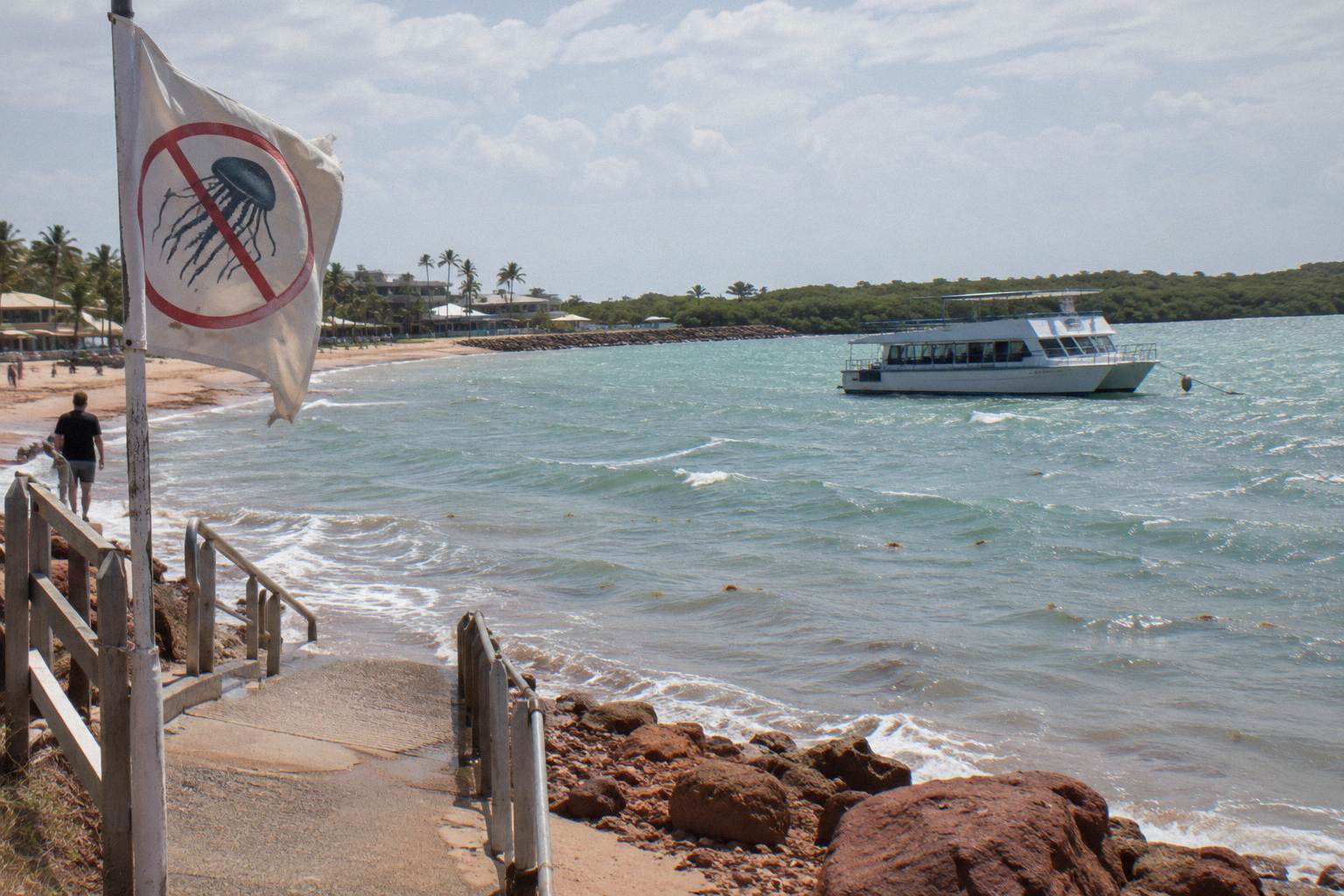
The Shire of Broome's official position is that Irukandji and box jellyfish stings are "rare and preventable", and it backs that with infrastructure rather than warnings alone. The Shire maintains five stinger stands and runs two stinger drags a day during the beach season.
That wording deserves a close read. "Rare and preventable" is not "absent", and it is not "harmless". It means stings happen infrequently and that the measures in place, vinegar at the stands and the drags that check the water, are the prevention layer. The Shire's own tropical marine jellyfish page carries the detail on the stands and the drags, and it is the page worth reading before any beach swim: the Shire's jellyfish information.
What the page does not give, in the versions fetched, is a clean calendar. Various traveller forums and secondhand summaries will tell you stingers run from roughly November to May. Those months are not confirmed by an official Broome source in the material behind this article, and repeating them here would be inventing a fact. The safe formulation, and the accurate one, is that the wet season is when the water is warmest and when the Shire's own beach patrol page notes that Broome's beaches are not patrolled at all.
So the practical reading is structural, not seasonal. Dry season: flagged area in front of Broome Surf Life Saving Club, daily patrols, stinger stands in place, drags running. Wet season: no patrols anywhere, including the flagged area. There are no lifeguards at Gantheaume Point or any other Broome beach in either season. That asymmetry, patrol versus no patrol, is the single most decision-relevant safety fact a visitor has, and it comes straight from the Shire's beach patrol page.
| What the official pages say | Where stingers are mentioned | Patrols | Month range published |
|---|---|---|---|
| Stings "rare and preventable" | Shire jellyfish page | Dry season, flagged area only | No |
| Five stinger stands, two drags a day in the beach season | Shire jellyfish page | Beach season only | No |
| Wet season beaches not patrolled | Shire beach patrol page | None | No |
| Irukandji named as a Peninsula risk, with no patrolled swimming | Visit Broome Dampier Peninsula page | None | No |
One more structural point. The tides matter here too, because they change what is in the water near shore and how quickly it moves. Visit Broome's tides page notes the Kimberley Coast has the biggest tides in the southern hemisphere, with a difference between high and low of up to around 10 metres. Water that moves that much, that fast, is a reason to treat any unofficial swimming spot with respect regardless of jellyfish. The article on how Broome's tides shape tour timing covers that in more depth.
Where Are Crocodiles Actually Named In Official Sources?
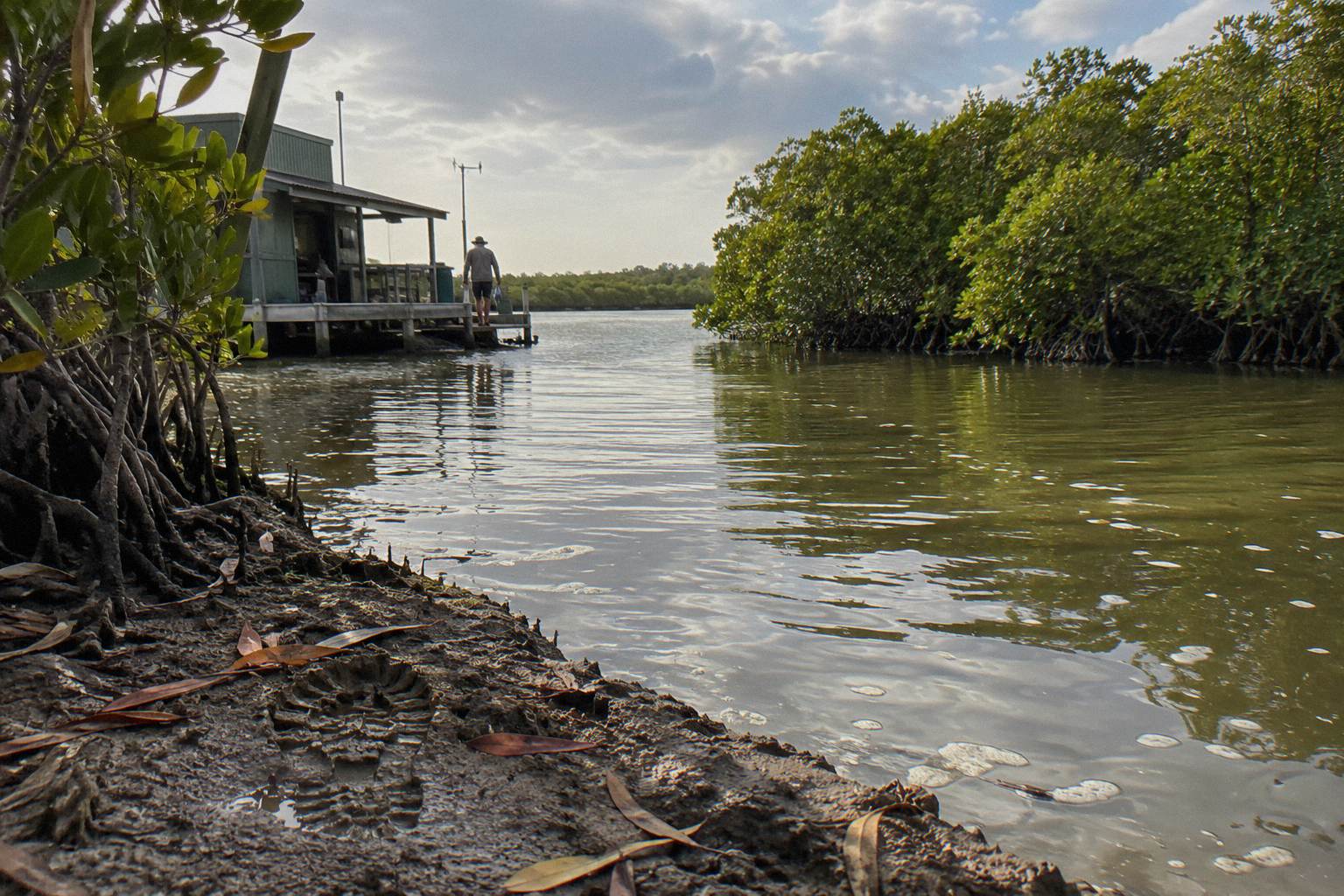
Two locations carry official saltwater crocodile mentions in the sources behind this article: Willie Creek, where the pearl farm's own page names resident saltwater crocodiles among the creek's wildlife, and the Dampier Peninsula, where Visit Broome lists crocodiles among the risks alongside strong tides and Irukandji stingers, with no patrolled swimming anywhere on the Peninsula.
Neither statement is a warning of danger to tour passengers. Both are statements of presence. At Willie Creek, crocodiles live in the creek that the pearl farm's electric boat tours operate on, and the farm lists them the same way it lists barramundi and brolgas, as residents. On the Peninsula, the Visit Broome page frames crocodiles as one reason there is no patrolled swimming, which is a statement about swimming, not about driving the fully sealed 220 km road or visiting Beagle Bay's Sacred Heart Church. The page itself is here: Visit Broome's Dampier Peninsula guide.
What no official Broome page does is declare anywhere croc-free. That matters, because the question visitors actually ask, "is X beach safe from crocodiles", is not a question any authority will answer with a yes. The honest answer is that saltwater crocodiles are a Kimberley-wide species, official materials name them where they are specifically known to be, and the absence of a mention is not a guarantee. This article will not claim any beach, creek or bay is croc-free, because no fetched source does.
It is also worth separating Broome township waters from the wider region. The crocodile mentions above sit at Willie Creek, north of town, and on the Peninsula further north again. The tour boats on Roebuck Bay and along the coast operate with crews who know the local conditions and brief passengers accordingly. If your question is whether a cruise is safe, the answer is that a crewed vessel with a briefing is a very different proposition from swimming alone at an unpatrolled beach, and the operators' cancellation terms, free up to 24 hours on the booking page for nearly every trip, mean weather or conditions calls never trap you into a bad day.
For a cautious traveller who wants to see crocodiles on purpose rather than worry about them by accident, the managed option exists and is the obvious one.
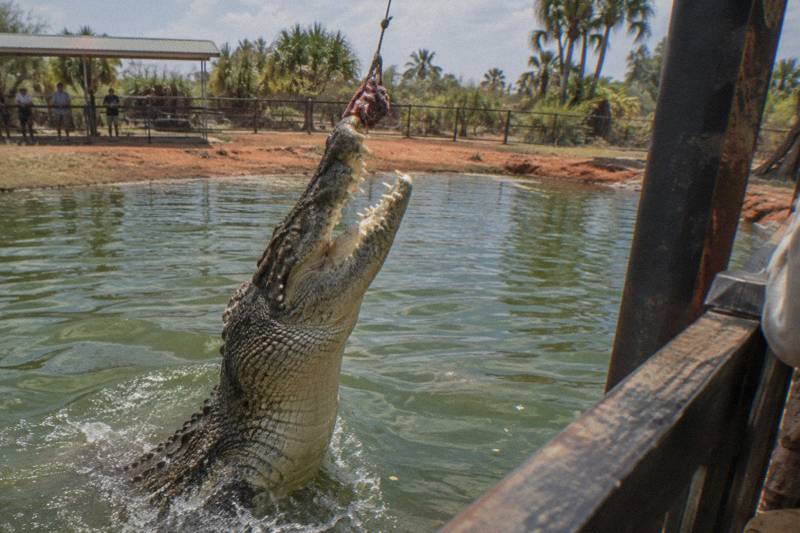
The park, at Lot 351 Broome Highway, is open all year round, seven days a week, 2pm to 5pm, with a feeding tour at 3pm daily and a closure only on Christmas Day. It holds five species of crocodiles and alligators. Broome and Around Bus Charters and Tours runs a transfer trip there from US$64 per person, 2.5 hours with pickup included, and the same operator runs the longer Afternoon Crocodile Refuge, Brewery And Museum trip from US$88, rated 4.7 from 326 reviews, which adds the refuge and a brewery stop over 4 hours.
Is A Cruise Safer Than Swimming Off The Beach?
A cruise is a managed activity with a crew, a vessel and a briefing, while swimming in Broome ranges from lifeguard-patrolled to entirely unpatrolled depending on season and location. The dry season flagged area at Cable Beach has daily patrols; the wet season has none anywhere; Gantheaume Point has none in any season. Neither activity is risk-free, but they are different categories of exposure, not two versions of the same risk.
Think of it as three tiers. Tier one: the flagged area in front of Broome Surf Life Saving Club during the dry season, with daily patrols, stinger stands and drags. Tier two: the same beach outside patrol season, or any other spot in the township, where the Shire's signage and your own judgement are the whole safety system. Tier three: the Peninsula and unpatrolled coastline, where Visit Broome names strong tides, Irukandji stingers and crocodiles together and states plainly that there is no patrolled swimming. A cruise sits outside this ladder entirely: you are on a vessel, the crew decides where it goes and when, and the briefing covers whatever the day's conditions raise.
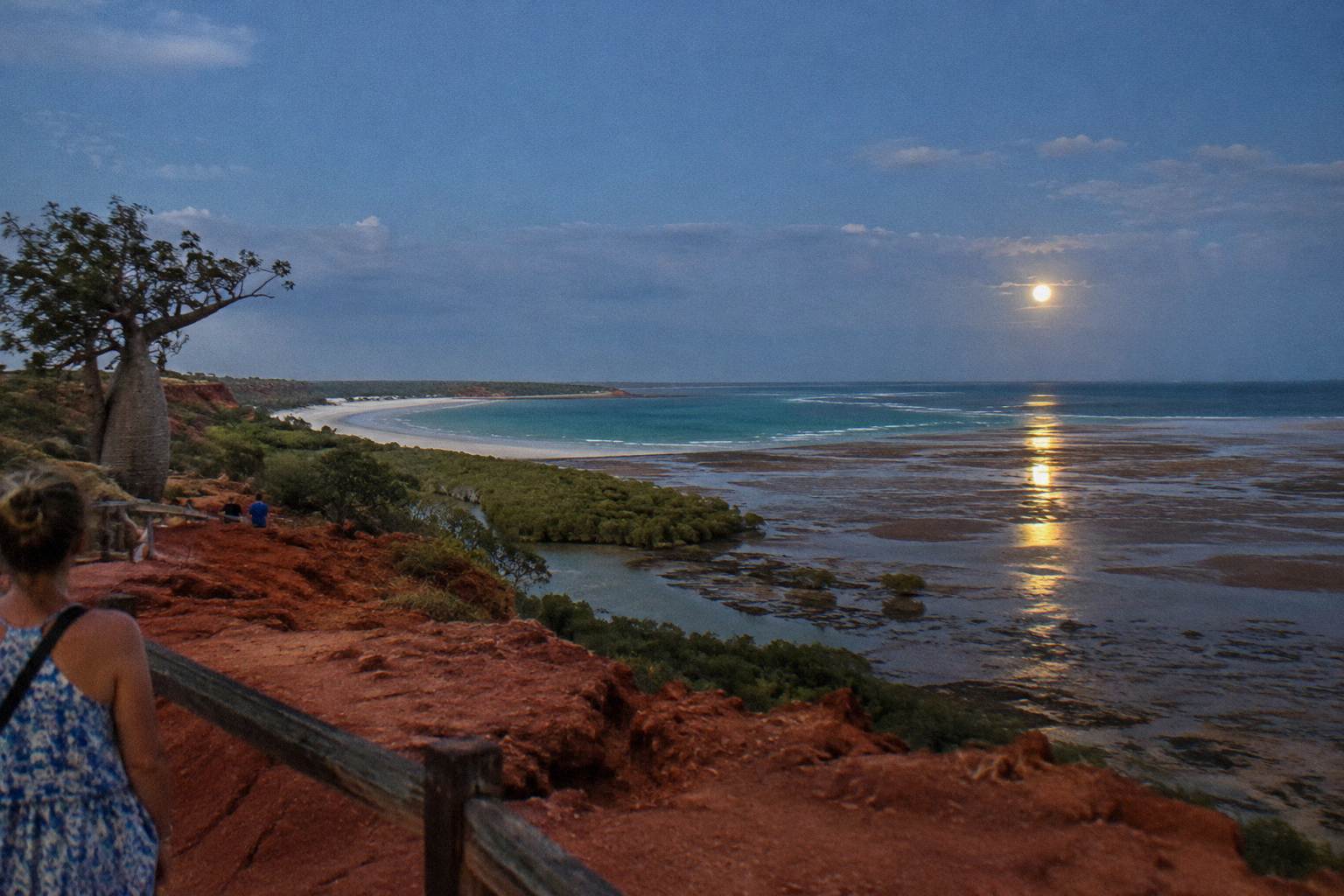
The boats themselves illustrate the point. Broome Adventure Cruises runs two coastal trips: the Scenic And Prehistoric Cruise, from US$135 per person, rated 4.9 from 215 reviews, 5 hours with transfers included, and the Dinosaur Adventure Cruise, from US$172, rated 4.9 from 198 reviews, 6 hours with transfers included. Both take in the dinosaur trackways coastline, where the footprints themselves are only reachable on foot at tides below 2.16 m and the rocks are, in Visit Broome's words, very slippery. A boat removes that slip-and-tide problem completely: you see the coast the tracks run along without standing on wet rock. The guide to dinosaur footprint tours versus going self-guided works through that trade-off.
On the water, the practical rules are the ones your operator gives you at the briefing. The Scenic And Prehistoric Cruise by Broome Adventure Cruises is a good example of the format: a skipper and crew who run the same coast regularly, a set route, and a 24-hour free cancellation window on the booking page if conditions or your plans change. You can check availability alongside the full Scenic And Prehistoric Cruise write-up.
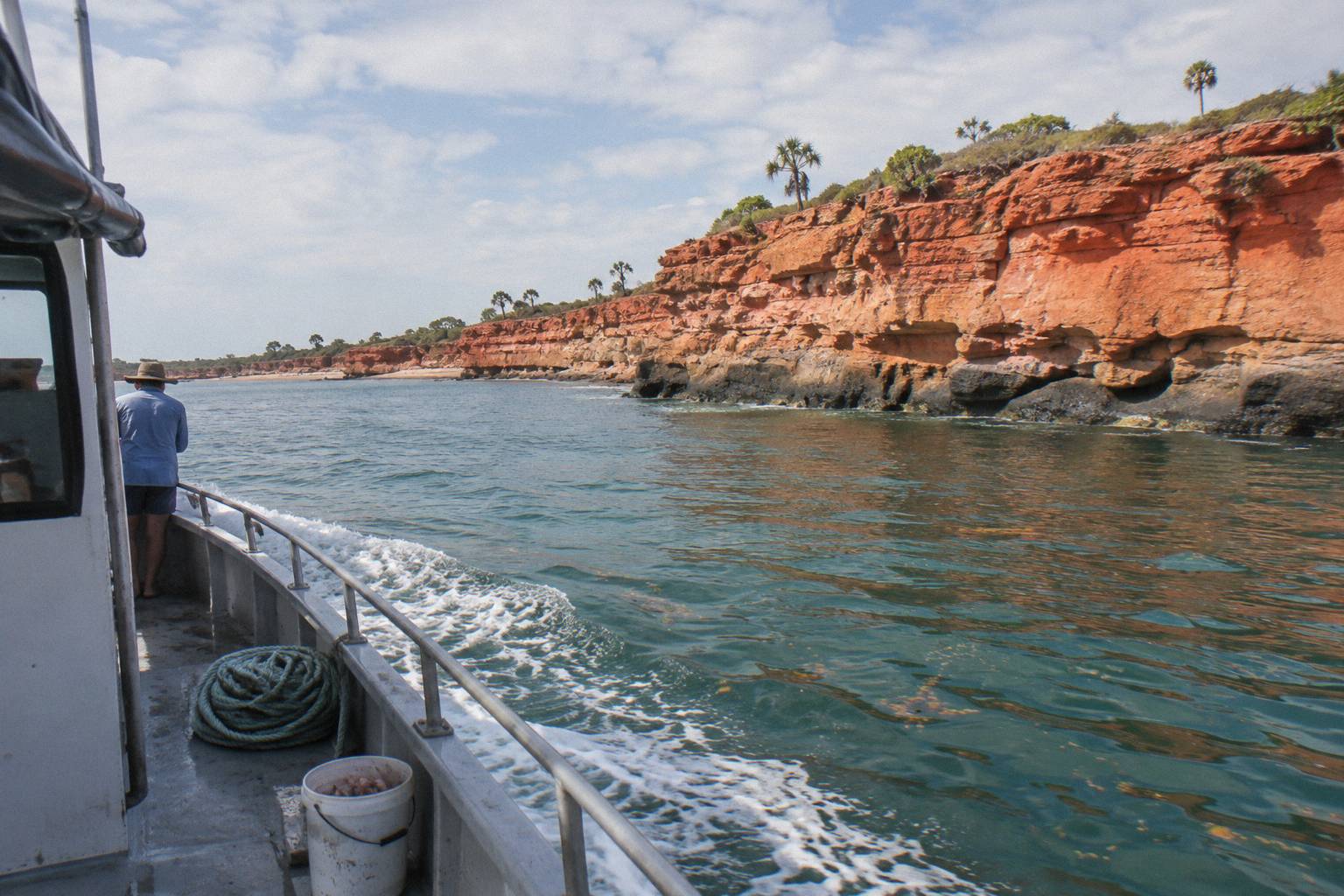
There is also a wildlife angle that cuts the other way. The Snubfin Dolphin Eco Cruise by Broome Whale Watching, from US$127, rated 4.9 from 601 reviews, about 4 hours 15 minutes with pickup included, exists because Roebuck Bay's wildlife, snubfin dolphins among it, is abundant and viewable from a boat. The same bay that asks swimmers to be careful is a genuinely productive wildlife cruise ground. The two facts are not in tension; they are the same ecosystem seen from two positions, in the water and on it.
How Do You Read Beach Signage And Season Flags?
Treat the Shire's signage at the beach as the final word over anything you read online, since signs carry current closures, the day's patrol status, and any stinger or crocodile advice for that stretch of sand. Standing examples include the north ramp by the Cable Beach amphitheatre closing to vehicles 8pm to 6am from 1 October to 30 November for turtle nesting, and vehicle closures for two hours either side of tides of 9 metres or more.
Those two closures tell you how the Shire manages this coast: with specific, dated rules tied to what the animals and the tides are doing, not blanket bans. The turtle season closure exists because the flatback turtle, the main nester on Cable Beach, comes ashore at night in that window. The tide rule exists because a 9-metre-plus tide reworks the beach and any vehicle on it. Neither is about crocodiles or stingers directly, but both show the pattern: local rules, posted locally, changed as conditions change.
The stinger stands fit the same pattern. Five of them, positioned along the main beach, each stocked for first aid, refreshed as part of the beach season regime. If you swim in the dry season inside the flags, you are swimming inside a system the Shire actively maintains. Step outside the flags, or outside the season, and you are outside that system. The Shire's page on beach patrols and seasons sets out the patrol boundaries.
One caution on vehicle access specifically. This article will not tell you that you can drive onto Cable Beach, because the sources conflict: Visit Broome's page ties the ramp closure to the Walmanyjun foreshore redevelopment's second stage, while the Shire's ramp page describes seasonal access from March to September when conditions allow. Where official sources disagree, a travel article should say so and stop. What is not in conflict: the 15 km/h speed limit on the beach where driving is permitted, and the warning that tides change quickly.
| Rule or facility | What it covers | Season or timing |
|---|---|---|
| Flagged swimming area | In front of Broome Surf Life Saving Club | Patrolled daily, dry season only |
| North ramp vehicle closure | Ramp by the amphitheatre | 8pm to 6am, 1 October to 30 November |
| High-tide vehicle closure | Whole beach, vehicles | 2 hours either side of 9 m-plus tides |
| Stinger stands | Five locations on the main beach | Beach season |
| Speed limit | Vehicles on the beach | 15 km/h at all times |
Can You See Crocodiles Safely In Broome?
Yes, in the sense that Broome has a purpose-built managed setting: Malcolm Douglas Crocodile Park, open 2pm to 5pm daily with a 3pm feeding tour, closed only on Christmas Day, holding five species of crocodiles and alligators. A guided transfer tour from US$64 per person, 2.5 hours with pickup included, gets you there and back without a self-drive.
The park is the answer to the "I want to see one, properly, behind a fence" instinct, and for families it is often the better crocodile experience precisely because it is contained. The feeding tour at 3pm is the structured event of the day. Child rates apply for ages 5 to 15 and under-5s enter free; check the booking page. The wider context of Broome's pearling and outback history is covered in the overview of Broome day tours, which slots the park into a full itinerary.
The honest framing, again, is that the park is not a simulation of the wild risk; it is a substitute for seeking it out. Seeing a large saltwater crocodile at a feeding tour satisfies the curiosity that might otherwise push someone toward creek mouths and mangroves on their own. The wildlife cruise carries a version of the same logic: you go with people who know the water. Neither makes the animals safe. Both make the encounter deliberate.
For the town-stay traveller who wants neither a boat nor a park visit, the middle path is the shoreline itself. The guide to things in Broome worth booking separates the water activities from the land ones, which is exactly the split a cautious reader needs when weighing comfort levels. And if crocodiles are your reason for hesitating rather than your reason for visiting, the site behind this article, Broome Town Tours, keeps a full roster with durations, pickup details and cancellation terms so you can filter for the low-exposure options first.
What Should A Cautious Traveller Actually Do?
Pick crewed activities over unpatrolled swimming, swim only inside the dry-season flags if you swim at all, treat Shire signage as the live authority, and attend the operator's briefing on every tour. Book trips with free cancellation up to 24 hours so a bad conditions day costs you nothing. Neither crocodiles nor stingers need to remove Broome's water experiences from your trip; they just move the smart choice from solo swimming toward crewed and managed options.
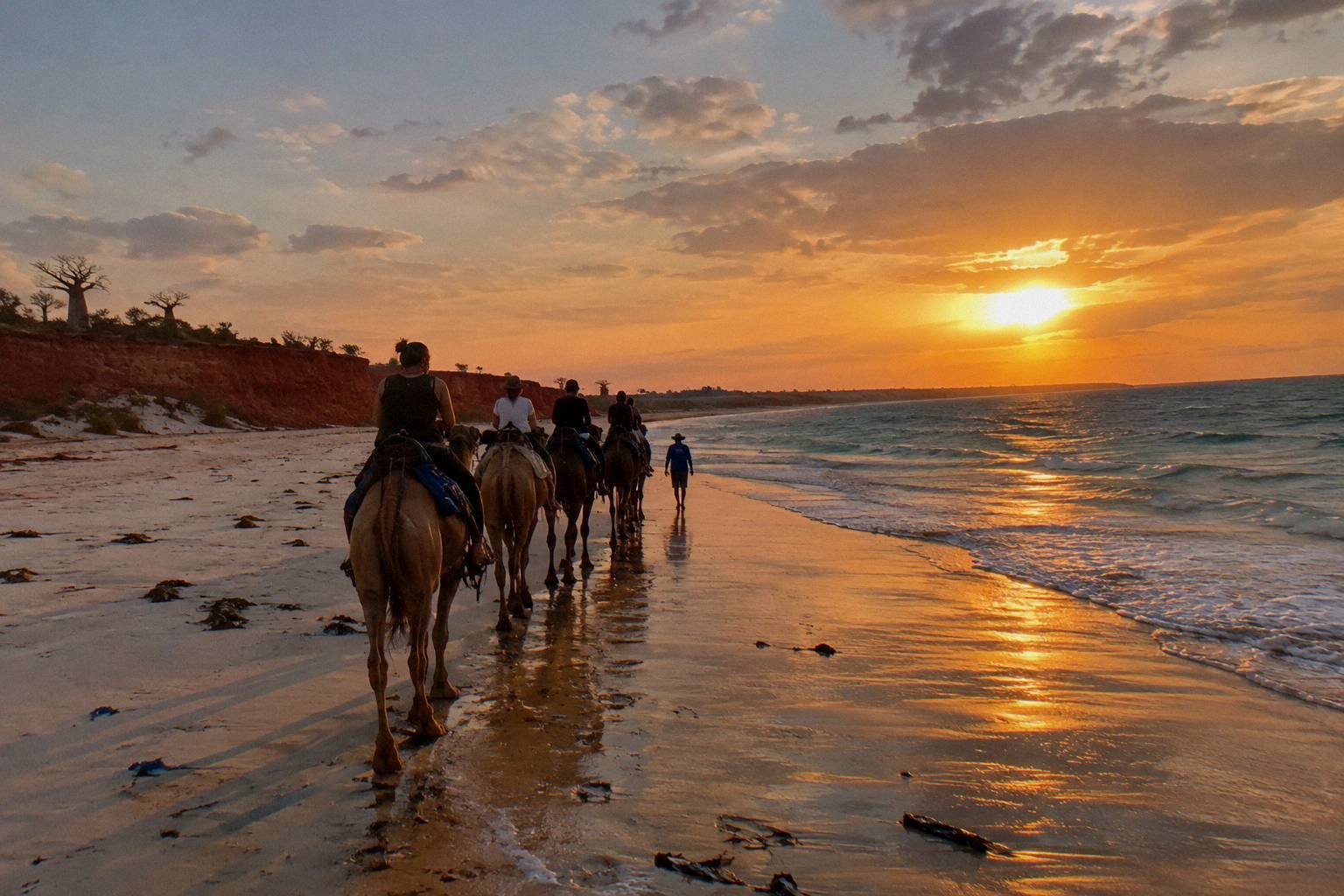
A worked example of the cautious itinerary: morning at the pearl heritage sites in Chinatown, where the Pearl Luggers Tour by Willie Creek Pearls runs about 1 hour 30 minutes from US$25.51, entirely on land. Afternoon at the crocodile park on a guided transfer, from US$64. Sunset on the water rather than in it, on the Catamaran Sunset Cruise by Broome Tours WA, about 3.5 hours from US$107, or the Cable Beach Sunset Camel Ride by Broome Camel Safaris, 1 hour from US$85, rated 4.8 from 572 reviews, which puts you on the sand at sunset without putting you in the sea. Every one of those carries free cancellation up to 24 hours on the booking page.
The reader who wants the water itself, not just the edge of it, has good options too, and they are the same boats discussed above. Here they are once more, side by side, for a final decision.
One last note on the snubfin dolphin option, since it rounds out the picture of Roebuck Bay wildlife: the Snubfin Dolphin Eco Cruise, from US$127, rated 4.9 from 601 reviews, about 4 hours 15 minutes with pickup included, free cancellation up to 24 hours. If your worry is that the bay is dangerous, a trip like this is the counterweight, a long, calm, crewed morning on exactly the water you were nervous about. If your worry is jellyfish, note that none of these cruises involves swimming; the exposure is the boat deck, not the water.
Common Questions About Crocodiles And Stingers In Broome
Crocodiles And Stingers On Broome Cruises And Tours: How Safe Is It?
Cruises are crewed, managed activities with briefings, while swimming ranges from dry-season patrolled to entirely unpatrolled. Stings are described by the Shire as rare and preventable, crocodiles are officially named at Willie Creek and on the Peninsula, and no official source declares any spot croc-free. Follow signage and your operator's briefing.
Can I Swim At Cable Beach In The Wet Season?
Not with any patrol support. The Shire states plainly that during the wet season Broome's beaches are not patrolled. The flagged area in front of Broome Surf Life Saving Club is patrolled daily in the dry season only, and no other Broome beach has lifeguards at any time of year.
Are There Crocodiles At Cable Beach?
No official source fetched for this article names crocodiles at Cable Beach, and no official source declares it or any other Broome spot croc-free. Crocodiles are specifically named at Willie Creek and on the Dampier Peninsula. Treat signage as the live authority and avoid swimming near creek mouths and mangroves.
Do Broome Cruises Go Where Crocodiles Live?
Willie Creek's pearl farm boat operates on a creek with resident saltwater crocodiles named by the operator, as part of a guided tour with a crew. Coastal cruises on Roebuck Bay and along the dinosaur trackway coastline operate as crewed vessel trips with briefings, which is a different exposure category from swimming.
When Is Stinger Season In Broome?
No month range is verified on the official pages behind this article, so none is printed. The Shire describes stings as rare and preventable, maintains stinger stands and runs drags in the beach season, and warns that beaches are unpatrolled in the wet season. Check Shire signage on the day.
Where Can I See Crocodiles Safely In Broome?
Malcolm Douglas Crocodile Park is the managed setting: open 2pm to 5pm daily, feeding tour at 3pm, closed Christmas Day, with five species of crocodiles and alligators. Guided transfer tours from Broome run from US$64 per person with pickup included, about 2.5 hours.