Dinosaur Footprints At Gantheaume Point: Tour Or Go Alone?
Comparing self-guided visits to the Gantheaume Point dinosaur footprints with Broome tours that explore the same prehistoric coastline, including tide rules, safety and costs.
Go alone if your dates line up with a low tide under 2.16 metres and you are confident on very slippery rock; otherwise book a tour if your tide window is poor or you would rather have a guide than a tide table. The footprints are free to visit, the dinosaur-named boat trips start at US$135 per person, the town tours from US$81, and no tour in the roster claims to reach the footprints themselves.
That last sentence surprises a lot of visitors, so it deserves the first paragraph. Broome's dinosaur trackways run along about 80 km of coast and date from the early Cretaceous, roughly 120 million years back, and the area was added to the West Kimberley National Heritage List in August 2011. But the tracks you can walk to from Gantheaume Point are reached on foot, at low tide, on rock the official tourism body describes as very slippery. The boat trips that carry "dinosaur" in their names are a different format entirely: they show you the coastline where those tracks exist, from the water, with a crew narrating the geology. Nothing in their booking pages says they visit the prints.
So the real decision is not "tour or miss out". It is three separate choices: can you safely walk to the prints yourself, do you want a guided explanation of what you are looking at, and how much of your Broome day do you want to spend on the dinosaur story. This article works through each one, then compares costs, safety and timing so you can match the option to your dates rather than to a brochure.
If you are working out the wider picture of what to book, the guide to Gantheaume Point dinosaur footprint tours covers the viewing options in more depth, and things to do in Broome worth booking lists the trips that consistently earn their price.
What The Self-Guided Walk Actually Involves
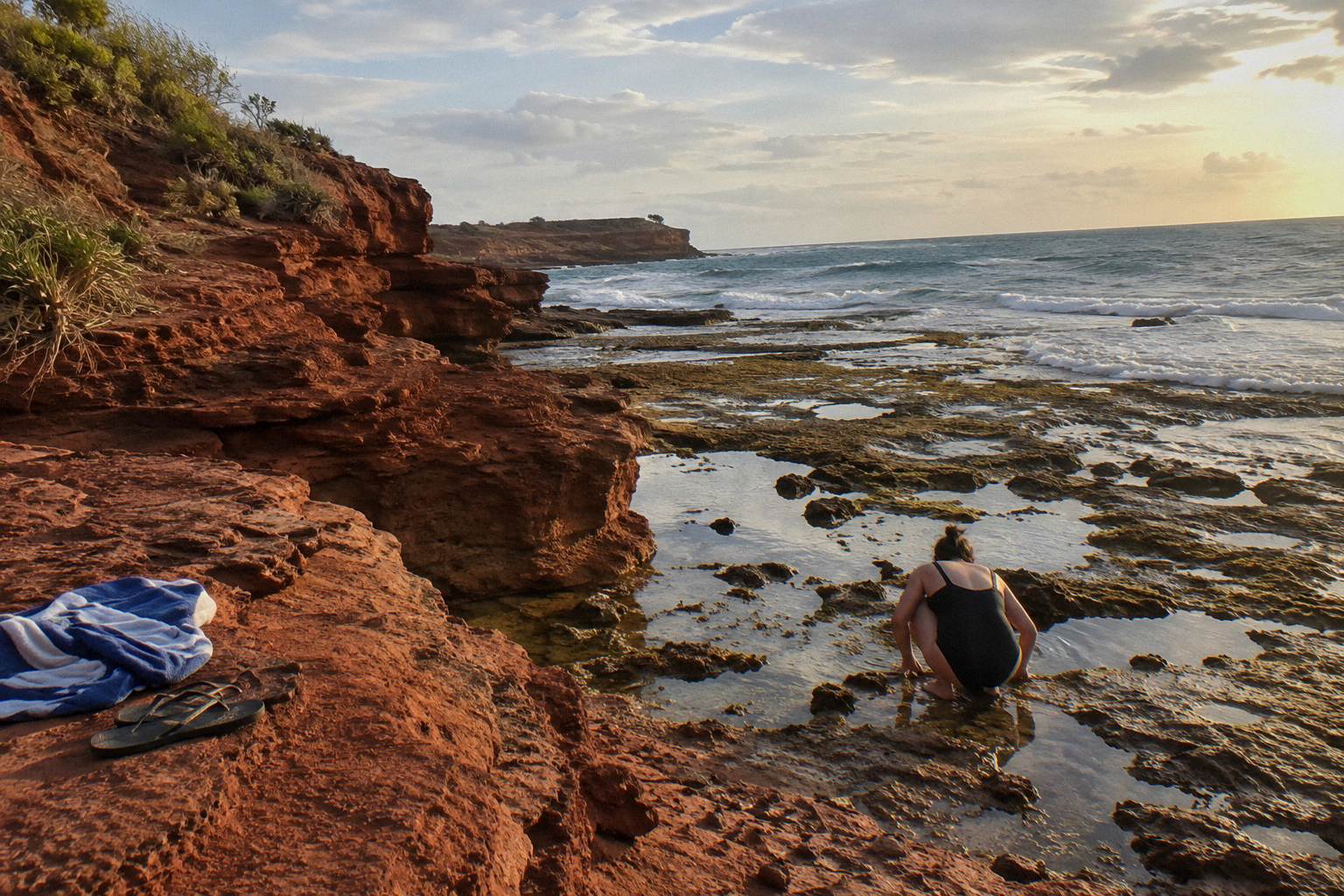
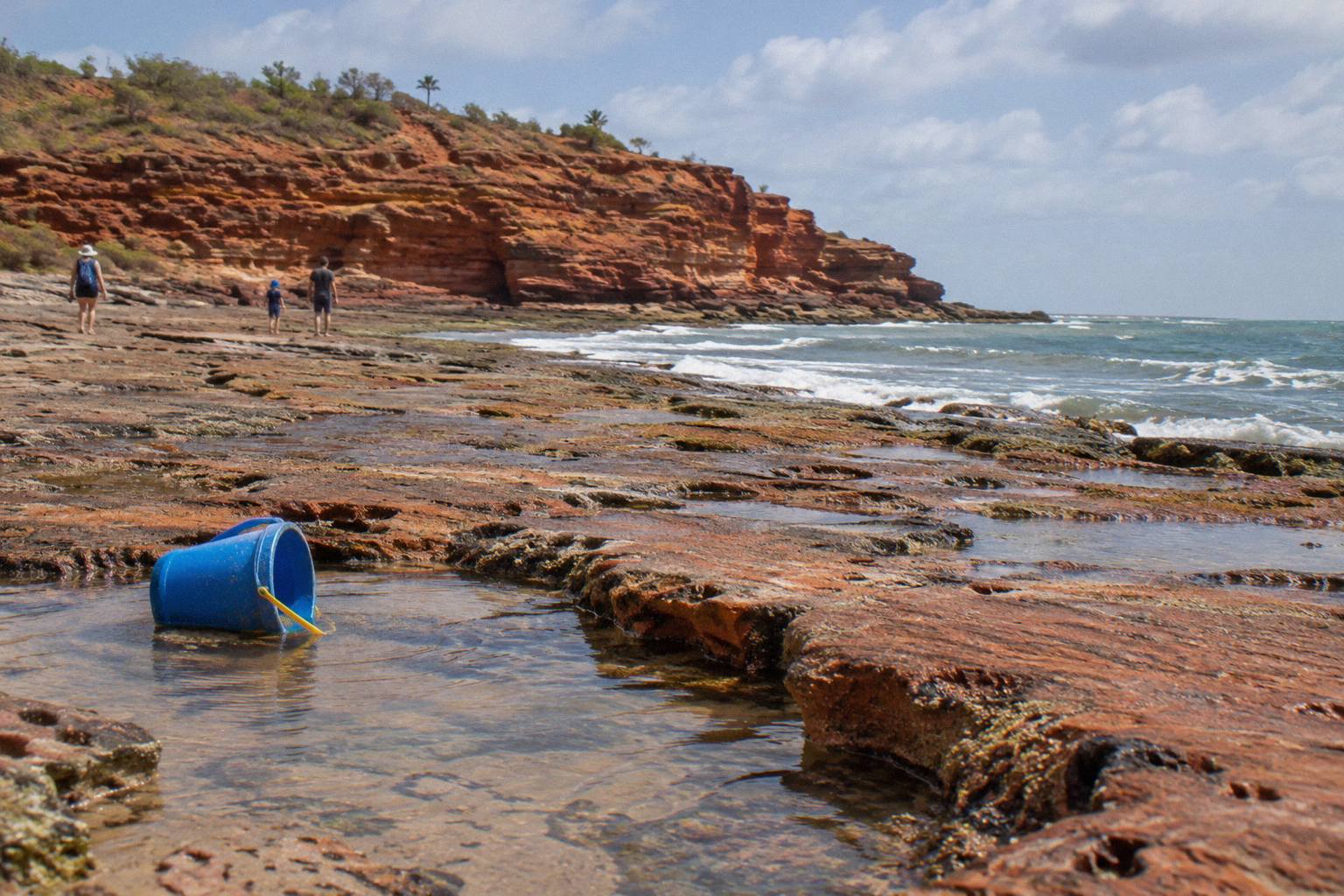
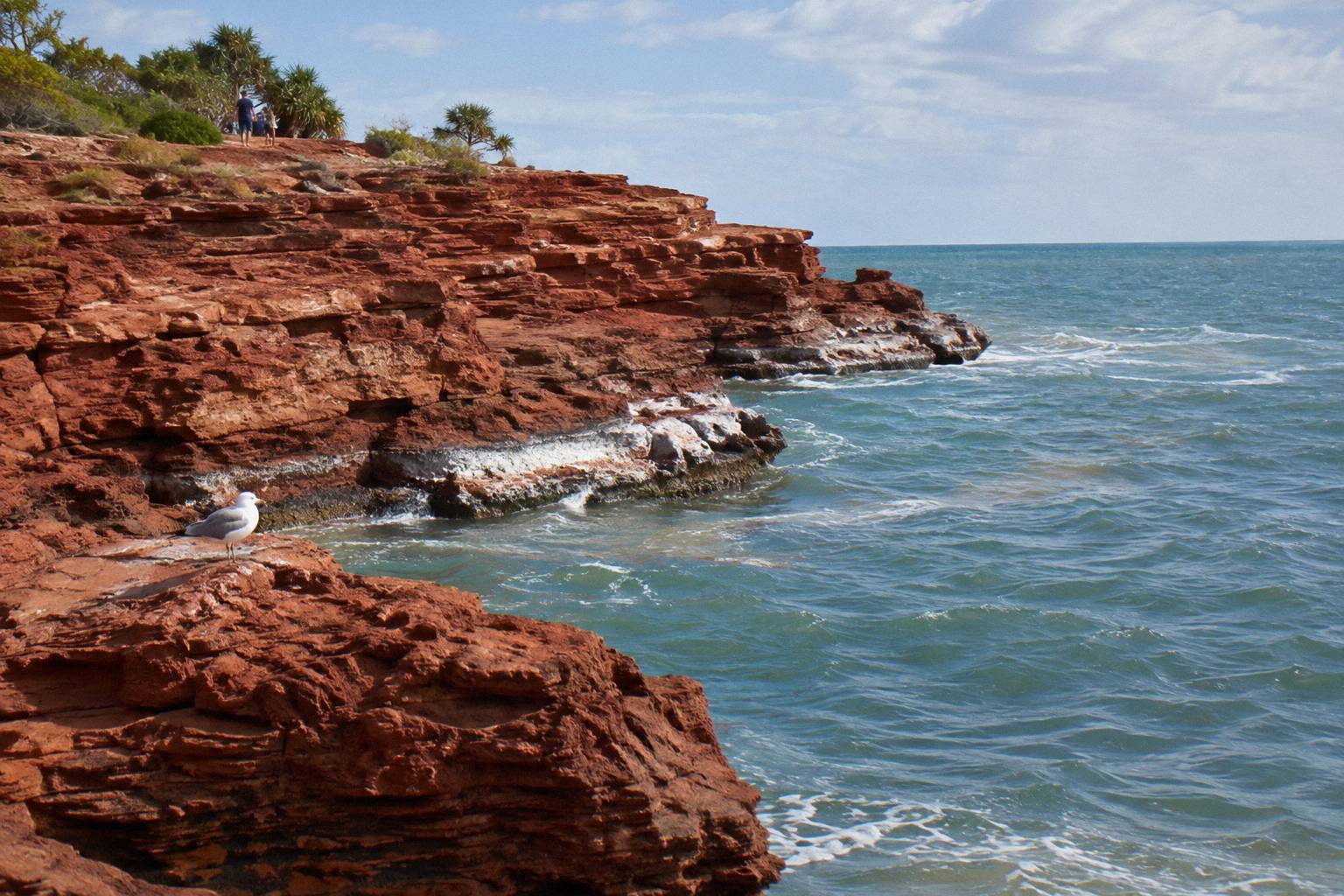
You walk from Gantheaume Point onto the reef flat at low tide, and the theropod tracks are reachable only when the tide is below 2.16 metres; most other track locations need a tide under 2.4 metres. The rocks are very slippery, there are no lifeguards, and Traditional Owners ask visitors to stay on designated paths. It costs nothing to visit, and the constraint is the tide, not a ticket.
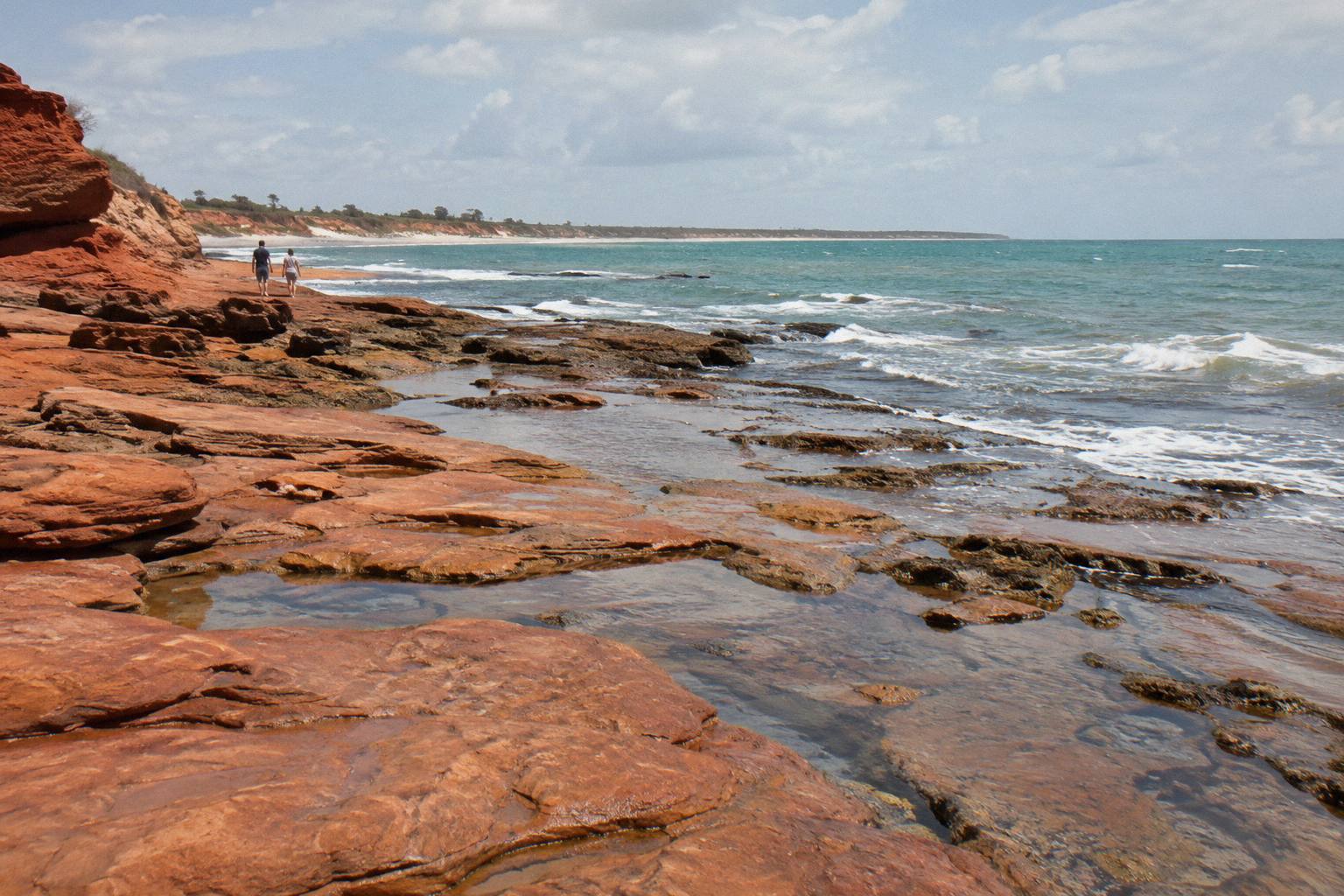
The tide number is the whole game. The Kimberley Coast has the biggest tides in the southern hemisphere, and the difference between high and low can reach around 10 metres, which is why a reef flat that is a shallow sea at lunchtime can be a walkable rock platform by late afternoon. Visit Broome's footprints page gives the 2.16 metre threshold for the Gantheaume Point theropod tracks and notes that visibility depends on conditions on the day. The tourism body also publishes a special dates PDF listing the low-tide days when the footprints, and the Catalina flying boat wrecks in Roebuck Bay, are most likely to be visible.
Practically, this means checking the tide table before you commit to a day and time, and being honest about your footing. The rock is smoothed by tides and often wet, so closed shoes with grip beat thongs by a wide margin. Allow time to walk out and back without rushing, and keep an eye on the turn: a falling tide becomes a rising one, and the 10-metre range means it moves quickly. There are no lifeguards at Gantheaume Point and no patrol of any kind, so this is a self-managed walk from start to finish.
A related detail worth planning around: at very low tides, under 0.86 metres, the flying boat wrecks in Roebuck Bay also emerge from the water, and Visit Broome suggests allowing an hour out and an hour back to reach them. Those wrecks are protected under the Heritage of WA Act 1990, and they sit on the opposite side of the peninsula from Gantheaume Point, so seeing both on the same day means checking two tide windows in one morning. Some visitors build an entire day around a single very low tide, and that is the day the self-guided option beats anything a tour can offer.
Which Tours Cover The Dinosaur Coast, And How
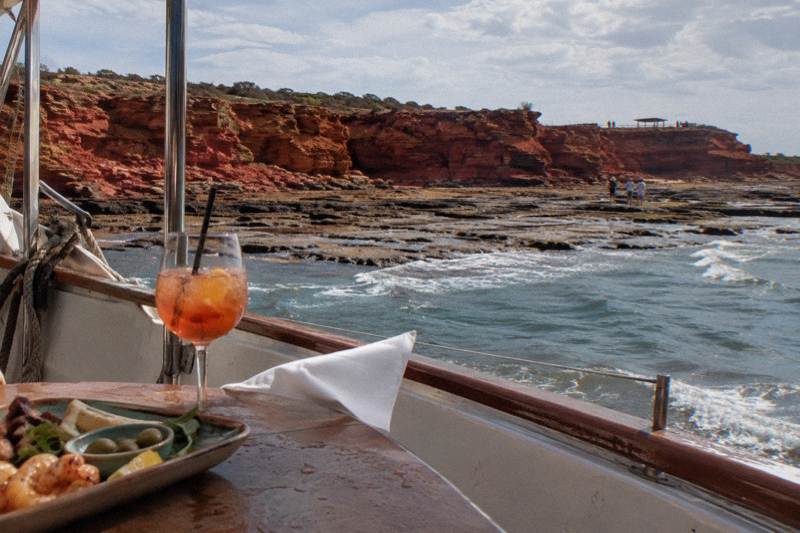
That framing matters because it is easy to assume a "Dinosaur Adventure Cruise" is a ferry to the tracks. It is not. It is a full-day-style boat trip along a coast where trackways have been documented for about 80 km, with the rock platform story told from the water, plus the wildlife and scenery of the Broome coastline. The Scenic And Prehistoric Cruise covers similar territory in a shorter frame, from US$135, rated 4.9 from 215 reviews, with transfers included. Both come from the same operator, Broome Adventure Cruises, so they are best understood as two lengths of the same idea rather than competing products.
The land option works differently. The Broome Town Tour, Panoramic And Discovery Morning, run by Broome and Around Bus Charters and Tours, is the most-reviewed trip on the roster at 1,216 reviews, rated 4.9, from US$81 for 2.5 hours with pickup included. Town tours of this kind typically include Gantheaume Point as a lookout stop, which gives you the clifftop view and the signage, though a bus cannot wait on a reef flat for a tide to drop. If prints on rock are the goal, the town tour is context, not access.
Here is how the three formats compare:
| Option | Format | From price | Duration | What it gives you |
|---|---|---|---|---|
| Self-guided walk | On foot at Gantheaume Point | Free | Set by the tide | The actual tracks, at tide under 2.16 m, with no guide |
| Dinosaur Adventure Cruise | Boat, transfers included | from US$172 | 6 hours | The dinosaur coast from the water, wildlife, commentary |
| Scenic And Prehistoric Cruise | Boat, transfers included | from US$135 | 5 hours | Similar coast in a shorter frame |
| Broome Town Tour, Panoramic And Discovery Morning | Bus, pickup included | from US$81 | 2.5 hours | Broome sights and history, typically a Gantheaume Point lookout stop |
Every one of those trips except where noted carries free cancellation up to 24 hours on the booking page, which matters when your plans hinge on a tide chart you cannot control. If the forecast turns, or the swell makes the reef walk unwise, a cancelable boat seat is worth more than a stubborn plan. You can read more about tide mechanics in how Broome tides affect tours.
Can You Do Both The Walk And A Tour On The Same Day?
Yes, and it is often the best use of one day: do the reef walk in the morning or afternoon when the tide is under 2.16 metres, then take a boat trip or town tour in the remaining window. The walk itself might take an hour or two, the cruises run 5 to 6 hours, and the town tour 2.5 hours, so the pairings that work are walk-plus-town-tour or walk-plus-shorter cruise.
The arithmetic is simple but worth spelling out. A very low tide happens twice a day on this coast, once by day and once by night, and only one of those is walkable. That leaves the rest of the day free. A morning reef walk pairs naturally with an afternoon town tour: the Broome and Around bus trip runs 2.5 hours with pickup included, from US$81, so it slots into the gap without eating the whole day. The Afternoon Town Tour With Beach Sunset from Australian Pinnacle Tours, about 6 hours from US$81, does the same in a longer frame, ending at the water as the light drops.
The cruise pairings are tighter. A 5 or 6 hour cruise plus a reef walk is a big day, and if the walk window collides with the cruise departure you have to choose. This is where reading the tide table against the schedule before you book anything saves a wasted ticket. As a rule of thumb, book the tide-dependent activity around the published low tide, then fit the fixed-schedule activity into what is left. A related question, how many tours fit in a Broome stay, is worth a read if you are building a multi-day plan.
One planning note on seasons: Broome's dry season, usually May to October, is when most tour schedules run at their fullest, and stinger and monsoon risk sits in the wet months. If your trip falls in the shoulder, check that your chosen cruise is running before locking in the rest of the day.
What The Footprints Are, And Why The Tide Rules Them
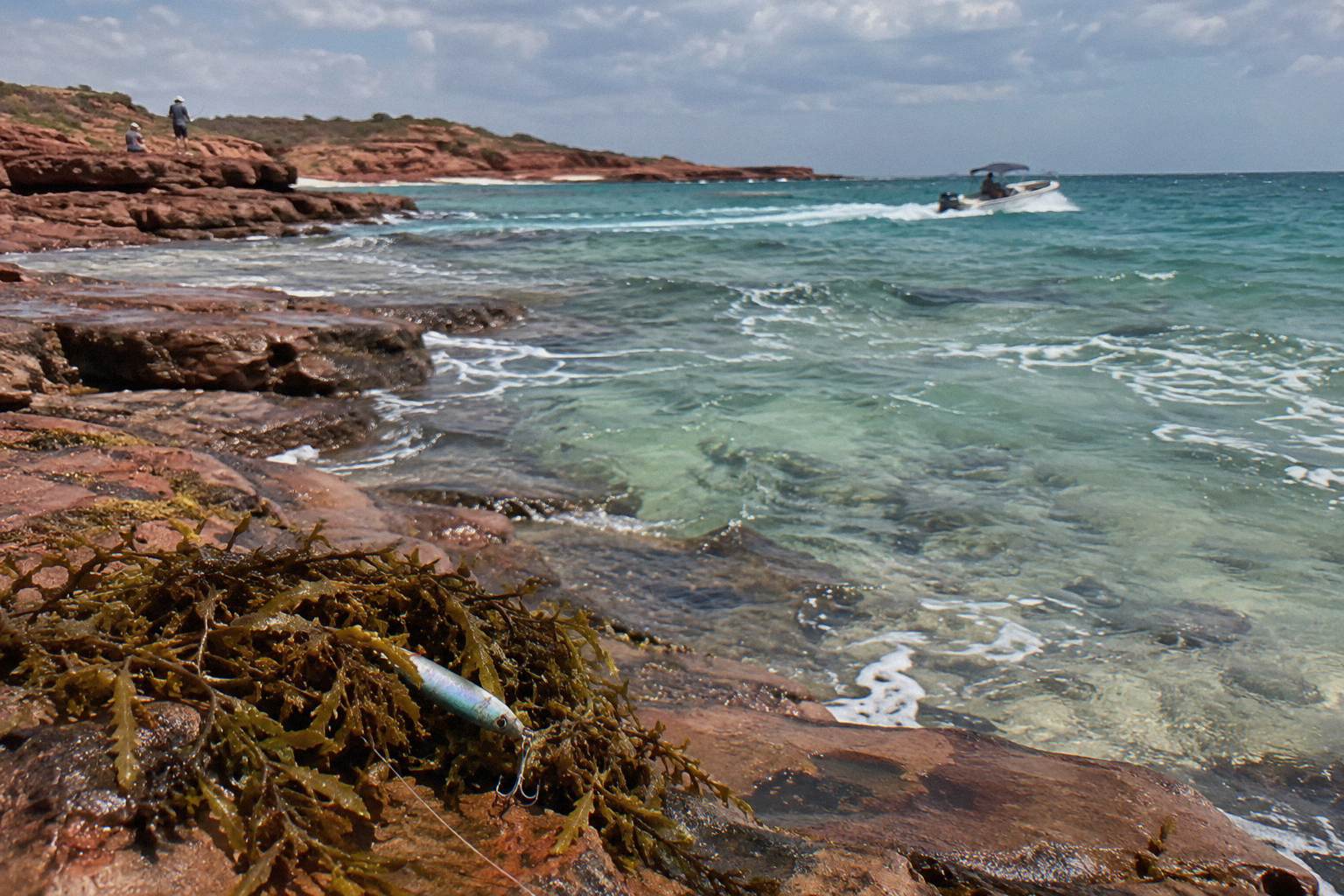
The Gantheaume Point tracks are early Cretaceous theropod prints, about 120 million years old, part of trackways documented along roughly 80 km of Broome's coast and listed on the West Kimberley National Heritage List since August 2011. They sit on the intertidal reef flat, which is why the tide, not an opening hour, decides when they can be seen.
A footprint on a rock platform that is submerged twice a day for hours at a time survives because the rock itself is hard and the prints are deep, but it is only visible in the low-tide window. Hence the 2.16 metre threshold for the main Gantheaume Point site and the broader 2.4 metre figure for most other locations. The tide range here, up to around 10 metres between high and low, is the largest in the southern hemisphere, which produces both the spectacular exposures and the risk: a flat that looks solid can refill fast.
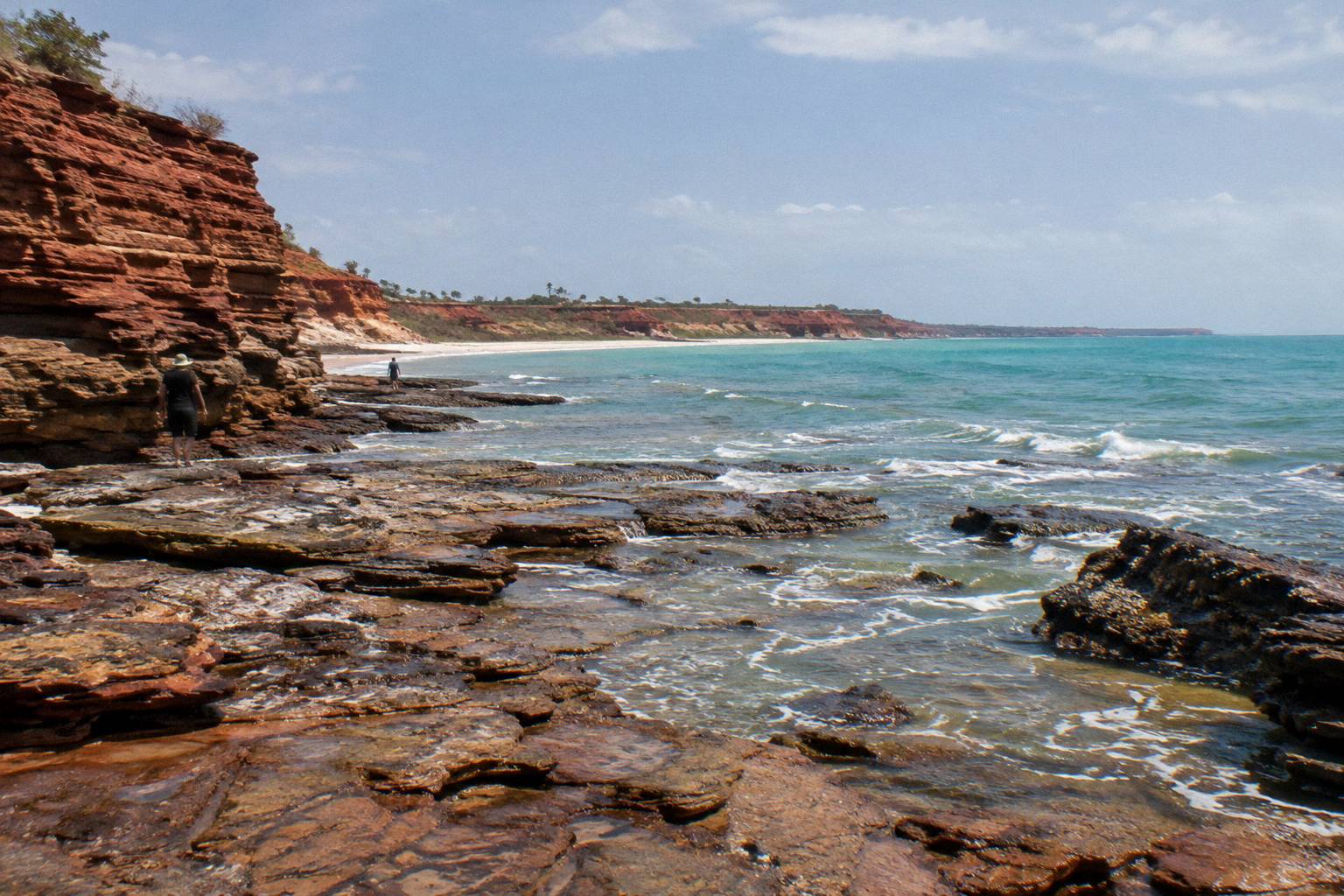
There is also a cultural layer that a good guide or a well-researched visit will surface. The request from Traditional Owners to stay on designated paths is not bureaucratic caution; the rocks carry both fossil trackways and living reef, and wandering off the marked route damages both. The signage at the point explains some of this, but the depth of the story, from the dinosaurs through to the pearling-era history of the town, is where guided product earns its keep. For that broader story, see the Broome history and Chinatown tours guide.
Cost Comparison: Walking Free Versus Booking A Tour
The walk costs nothing, while the tour formats run from US$81 for the 2.5-hour town bus tour, from US$135 for the 5-hour Scenic And Prehistoric Cruise and from US$172 for the 6-hour Dinosaur Adventure Cruise, all per person. The cheapest way to see the actual prints is free; the cheapest way to have someone explain the whole coast is the town tour at the low end of that range.
Prices shift, so treat those as the booking-page from-prices they are, and check the live listing for the day you want. What the money buys differs sharply between formats. The bus tour buys context and convenience: pickup, commentary, and a loop of Broome's sights in a short frame. The cruises buy time on the water, wildlife chances, and a perspective on the coast that no clifftop visit can give. The walk buys the thing itself, the actual rock and prints, at the price of doing your own tide homework and accepting slippery footing.
A planning picture for a couple, using the per-person from-prices:
| Plan | Per-person cost | Time needed | Best when |
|---|---|---|---|
| Self-guided walk only | Free | 1-2 hours at low tide | The tide window is clear and you are confident on rock |
| Walk plus town tour | from US$81 for the tour | Half a day | You want prints plus a guided overview of Broome |
| Scenic And Prehistoric Cruise | from US$135 | 5 hours | The tide window is poor, or you want the water view |
| Dinosaur Adventure Cruise | from US$172 | 6 hours | A full dinosaur-coast day with transfers handled |
Free cancellation up to 24 hours before applies on the booking page for all three of those tours, which softens the risk of a tide-or-weather change of plan. Doubling up a free walk with one paid trip is also the pattern that keeps a family budget sane: the prints cost nothing, so the money goes to the part of the day that genuinely needs a boat or a bus. If you are weighing the water options against each other, Broome cruises explained breaks down the formats.
Safety And Access: Who Should Not Attempt The Walk
The self-guided walk suits confident adults and supervised children on a falling-to-low tide, and it suits nobody in rough conditions, at higher tides, or without grippy footwear; there are no lifeguards at Gantheaume Point, the rocks are very slippery, and the designated-path request from Traditional Owners exists partly because the reef is both fragile and uneven. If anyone in your group has mobility limits, the boat formats are the safer way to see this coast.
Mobility is the honest filter. The reef flat is not a path; it is broken, sloping rock with pools and weed, and a fall there is a long way from help. For visitors with balance or mobility concerns, the cruise product line is genuinely the better answer, and there is a dedicated discussion in horizontal falls tour mobility considerations that, while written for a different trip, covers the same questions about transfers, boarding and uneven ground. Families with young children can do the walk at a calm low tide but should keep the designated paths strictly.
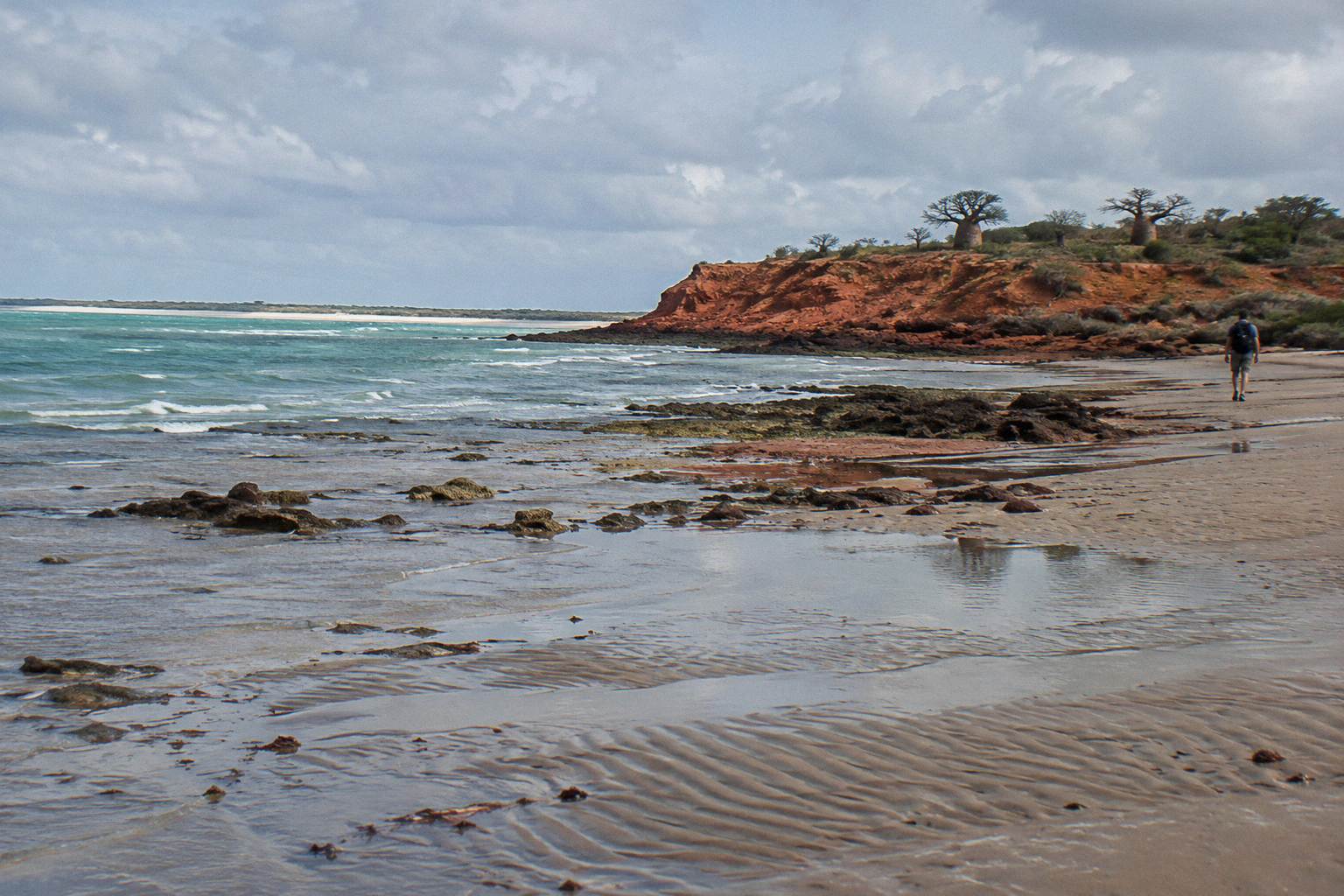
Timing rules of thumb: walk on a falling or low tide well under the 2.16 metre threshold, allow more time back than you think you need, and treat any swell or wind as a reason to stay on the clifftop. The lookout itself is a fine consolation, with the red rock against the turquoise water that makes this point one of Broome's most photographed spots, and it costs nothing either. On the risk side of the water, jellyfish and crocodiles are a real consideration in this region; crocodiles and stingers on Broome cruises covers what applies when.
From-prices can move, and each tour page on Broome Town Tours carries the live figure for that trip, so the listing is the place to confirm the current number before booking.
Common Questions About Dinosaur Footprints At Gantheaume Point
Dinosaur Footprints At Gantheaume Point: Tour Or Go Alone?
Go alone if the tide is below 2.16 metres and you are steady on slippery rock; book a tour if the tide window is poor or you want guided commentary. The walk is free, town tours run from US$81 and the dinosaur-coast cruises from US$135. No tour claims to take you to the footprints themselves.
What Tide Do You Need To See The Gantheaume Point Dinosaur Footprints?
The theropod tracks at Gantheaume Point are reachable on foot when the tide is below 2.16 metres, and most other track locations along the coast need a tide under 2.4 metres. Visit Broome publishes a special dates PDF of the low-tide days.
Does The Dinosaur Adventure Cruise Visit The Footprints?
No booking-page fact for that cruise says it visits the footprints. It is a 6-hour boat trip from Broome Adventure Cruises, from US$172 with transfers included, rated 4.9 from 198 reviews, that explores the dinosaur coastline from the water. Book it for the coast, not as a replacement for the reef walk.
Is The Self-Guided Walk Dangerous?
It demands care rather than skill: the rocks are very slippery, there are no lifeguards, and the tide can rise quickly on a coast with a range of up to around 10 metres. Wear grippy footwear, stay on designated paths as Traditional Owners request, and allow generous time to return.
Can You See The Footprints And The Flying Boat Wrecks On The Same Day?
Sometimes, on a very low tide. The wrecks in Roebuck Bay appear below a tide of 0.86 metres, while the footprints need under 2.16 metres, and the sites sit on different sides of the peninsula. Allow an hour out and an hour back for the wrecks, which are protected under the Heritage of WA Act 1990.
How Much Does It Cost To See The Dinosaur Footprints?
The walk to the prints is free. Guided alternatives start at from US$81 per person for the 2.5-hour town bus tour, from US$135 for the 5-hour Scenic And Prehistoric Cruise and from US$172 for the 6-hour Dinosaur Adventure Cruise.